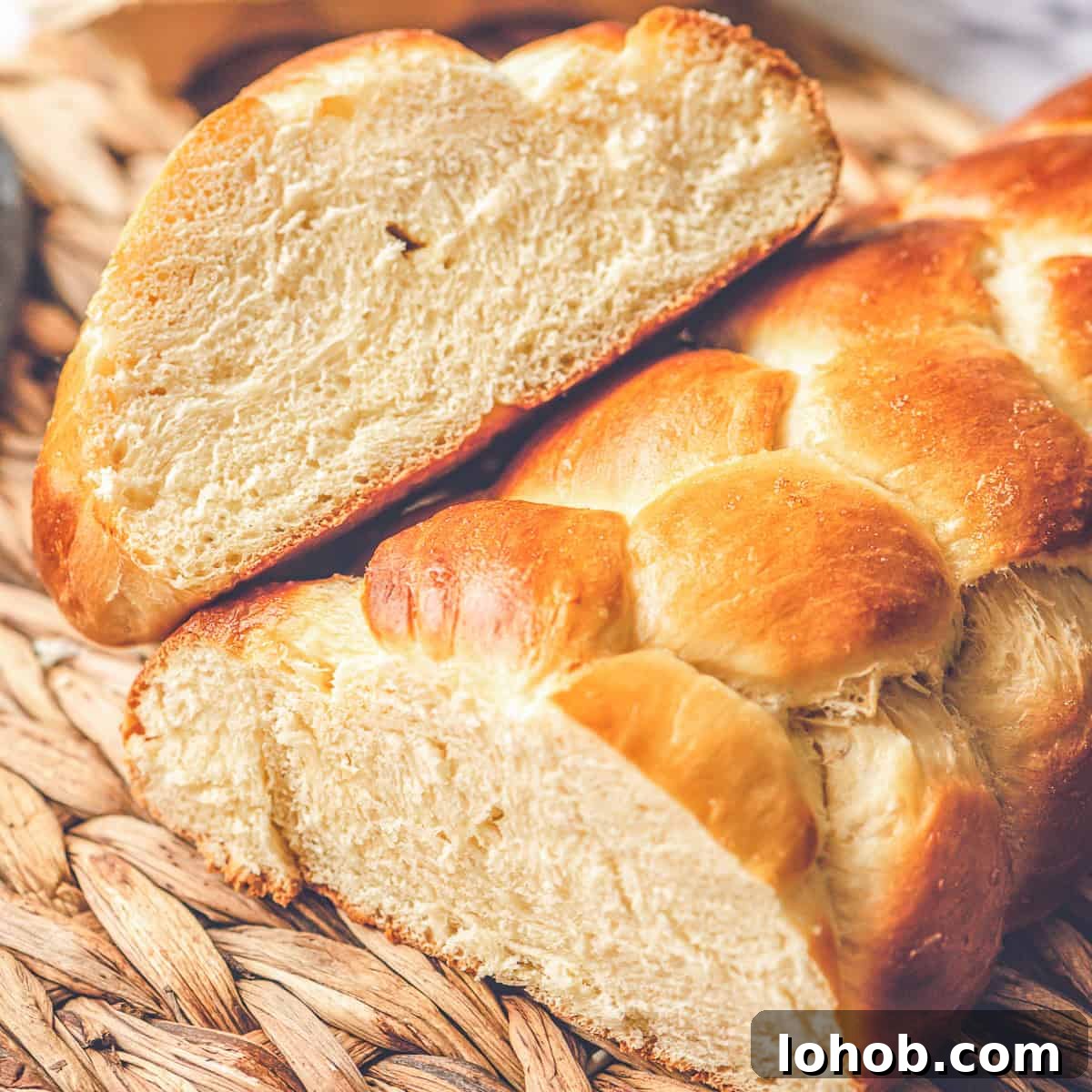
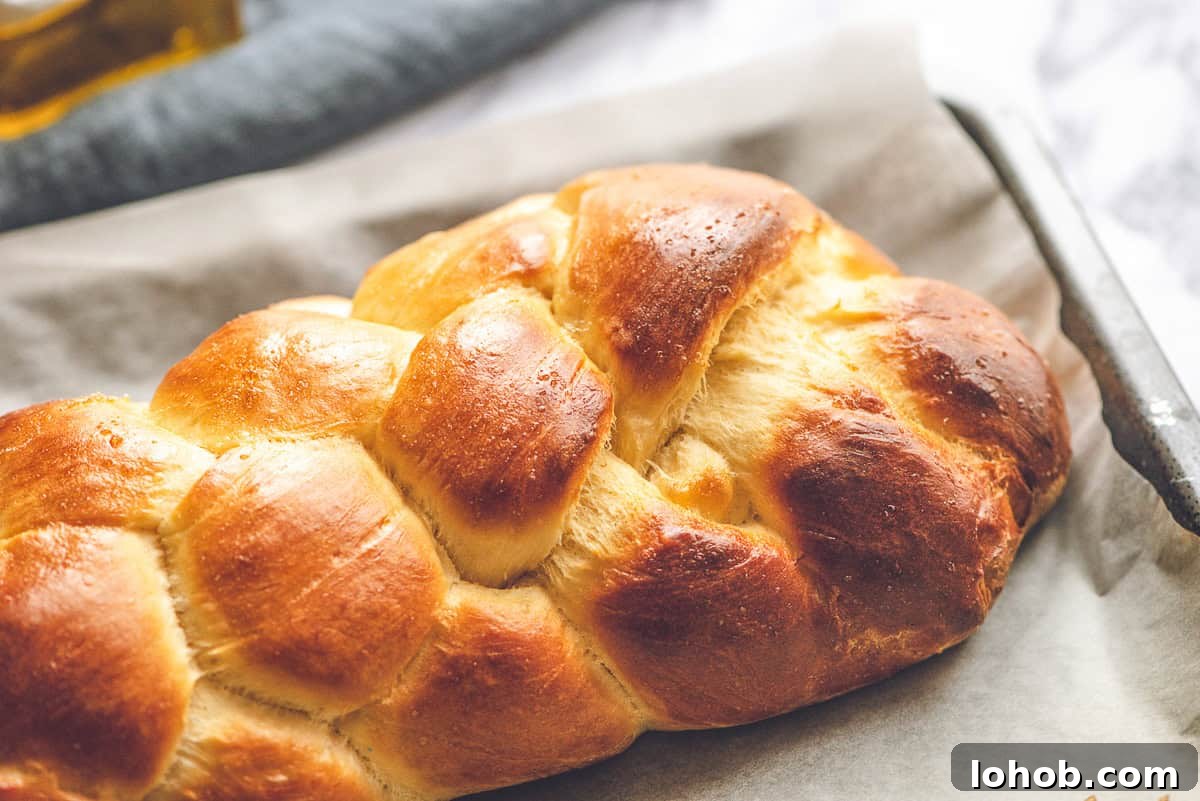
There’s nothing like the scent of freshly baked challah filling your kitchen. This enriched, egg-forward loaf—braided and golden—has a tender, slightly sweet crumb and is incredibly versatile. Serve it warm, use it for challah French toast, or bring it to a family meal; this homemade challah is worth making.
I’ve baked this recipe many times and refined the method so you can expect a well-risen, beautifully braided loaf with a deep golden crust every time.
This post was originally published in December 2016 and has been fully updated with new photos and helpful tips to make the recipe easy to follow.
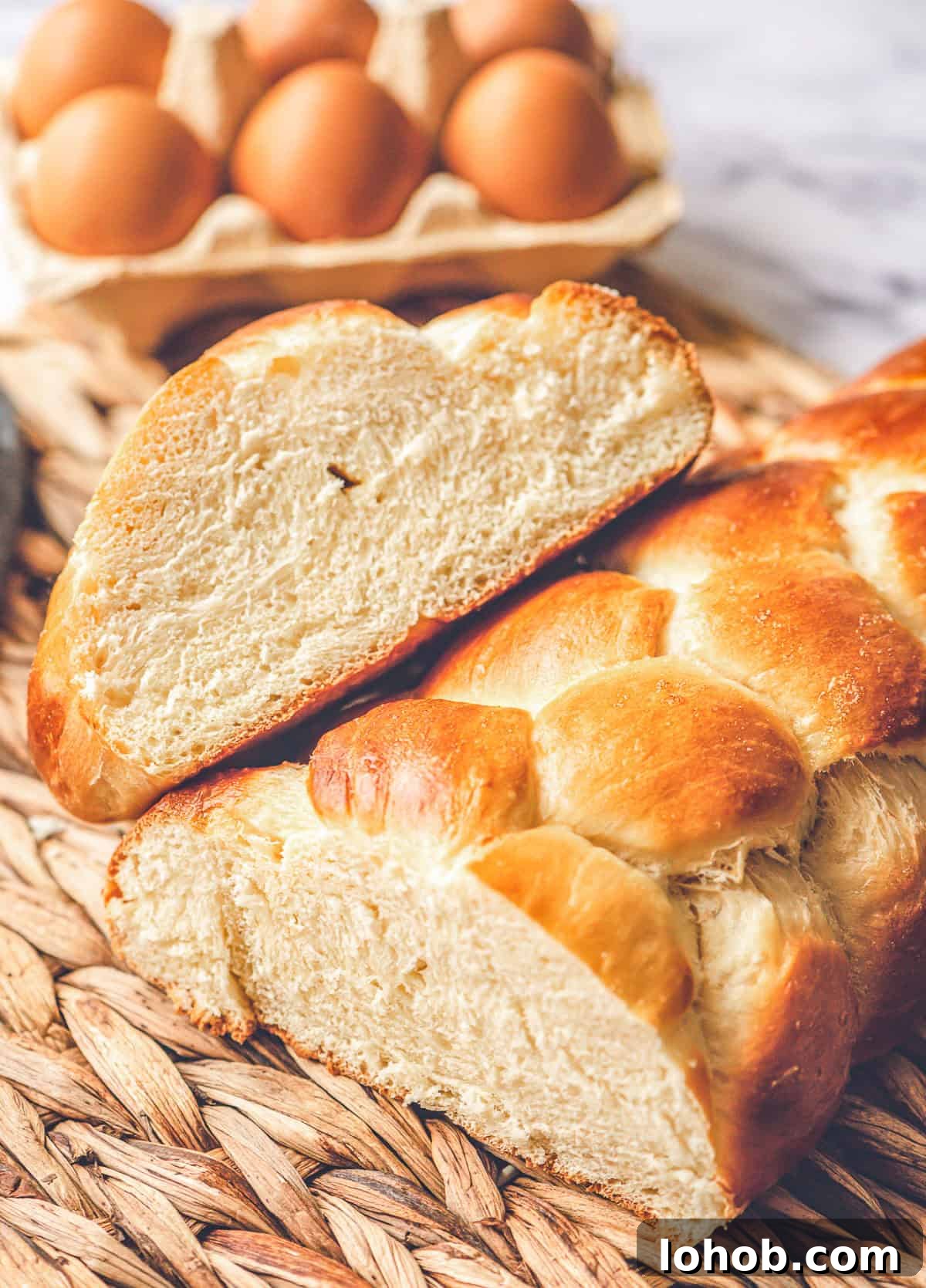
What Makes Challah Bread Special?
Challah is a traditional Jewish bread often served for Shabbat and holidays. The braid is a beautiful symbol of unity and tradition, while the dough—enriched with eggs, honey, and oil—produces a soft, tender crumb and a subtly sweet flavor.
Unlike enriched breads made with butter, challah uses oil, which keeps it dairy-free and yields a slightly lighter texture with a pronounced eggy character.
Why You’ll Love This Recipe
Challah is easier to make than it looks, and once you try this homemade version you’ll likely skip store-bought loaves. Highlights:
- Beginner-friendly: The dough is forgiving and straightforward to work with; braiding becomes intuitive after a few tries.
- Versatile: Enjoy fresh, toast slices, or transform leftovers into French toast or bread pudding.
- Make-ahead friendly: You can freeze shaped loaves and bake them later for fresh bread on demand.
Ingredients You’ll Need
Challah relies on simple pantry staples that combine into a satisfying loaf. Key ingredients include:
- Active dry yeast and lukewarm water: To activate the yeast and give the dough lift.
- Honey: Adds gentle sweetness and color.
- Eggs and an extra yolk: Enrich the dough and contribute to the loaf’s golden color and tender crumb.
- Vegetable oil: Keeps the bread moist without using butter.
- All-purpose flour and salt: Provide structure and seasoning.
- Egg white for wash: Creates the glossy, deep brown finish.
Exact measurements are provided in the recipe card below. You can scale the recipe there if needed.
Step-by-Step Instructions
Below is a concise overview of the process. Refer to the recipe card for full details and exact times.
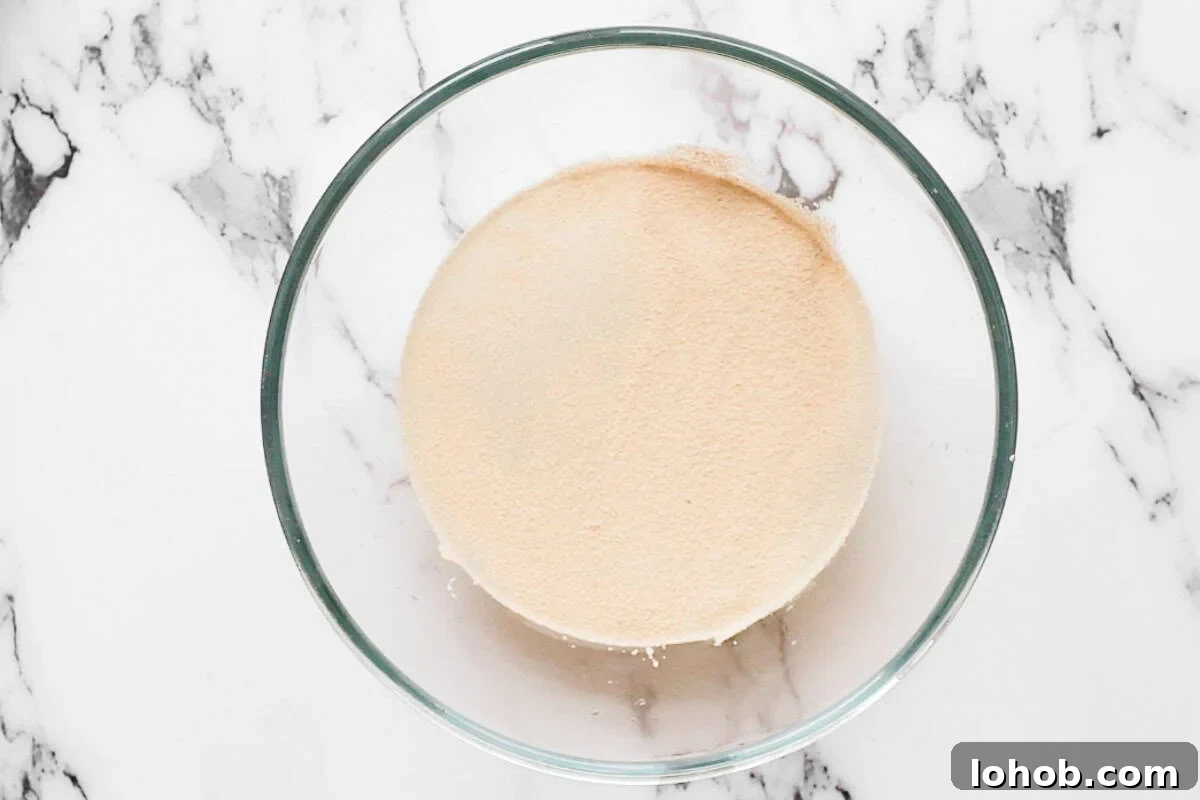
Step 1: Activate the yeast
Sprinkle the yeast over lukewarm water and wait for it to become frothy to confirm the yeast is active.
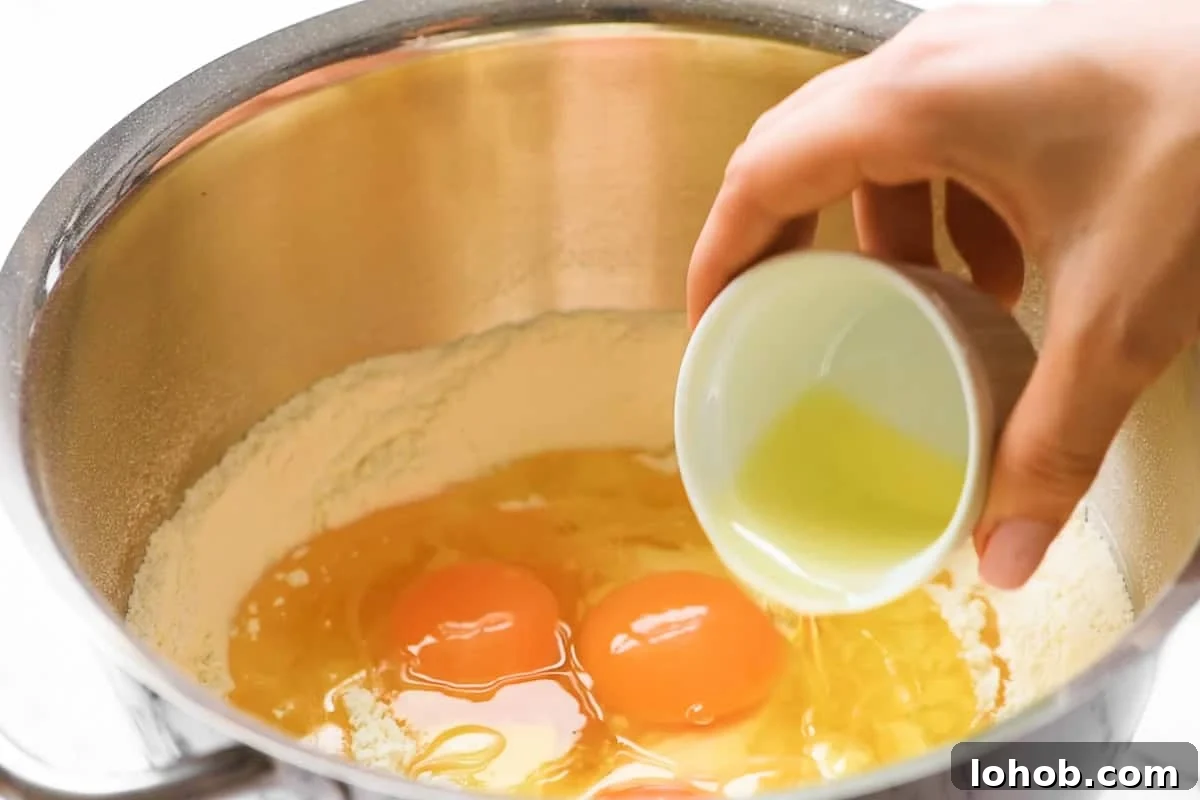
Step 2: Make the dough
Combine flour and salt in a mixer bowl, then add honey, eggs, egg yolk, and oil. Mix to form a shaggy dough and pour in the yeast mixture.
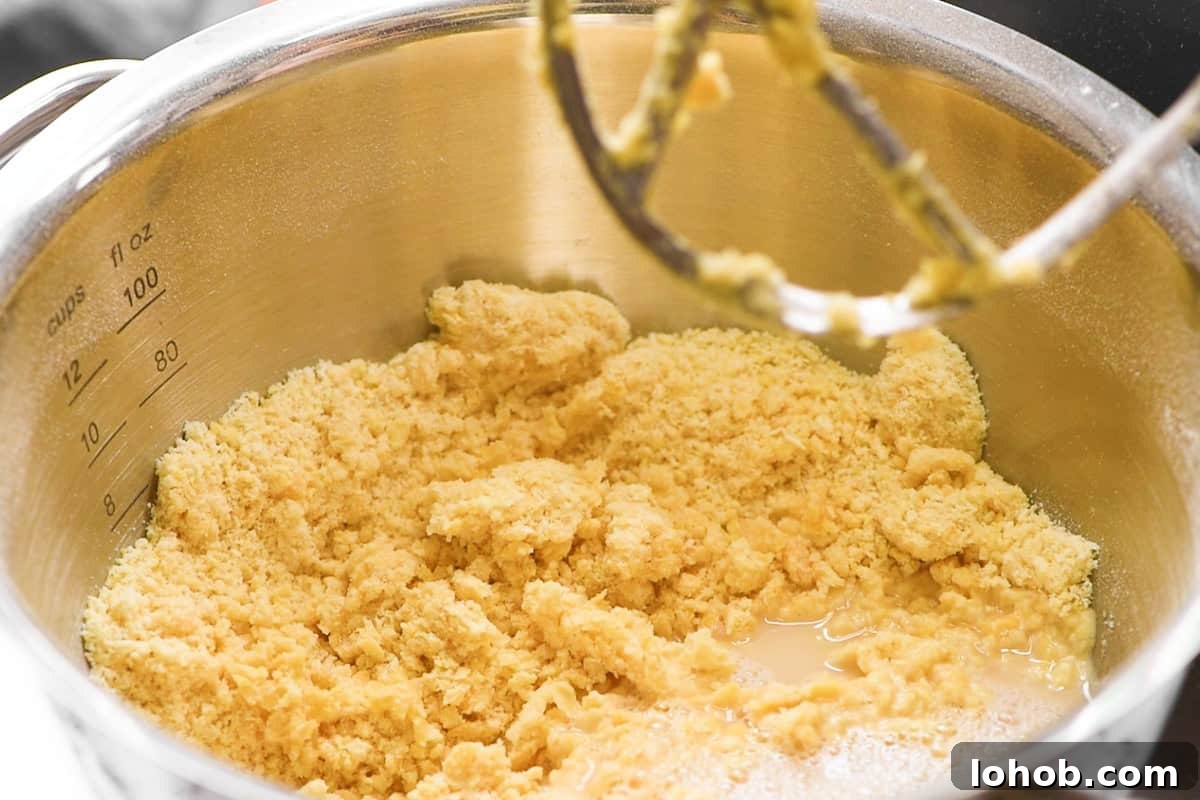
Mix until a shaggy mass forms, then knead until the dough is smooth and elastic, adding reserved flour a spoonful at a time if needed.
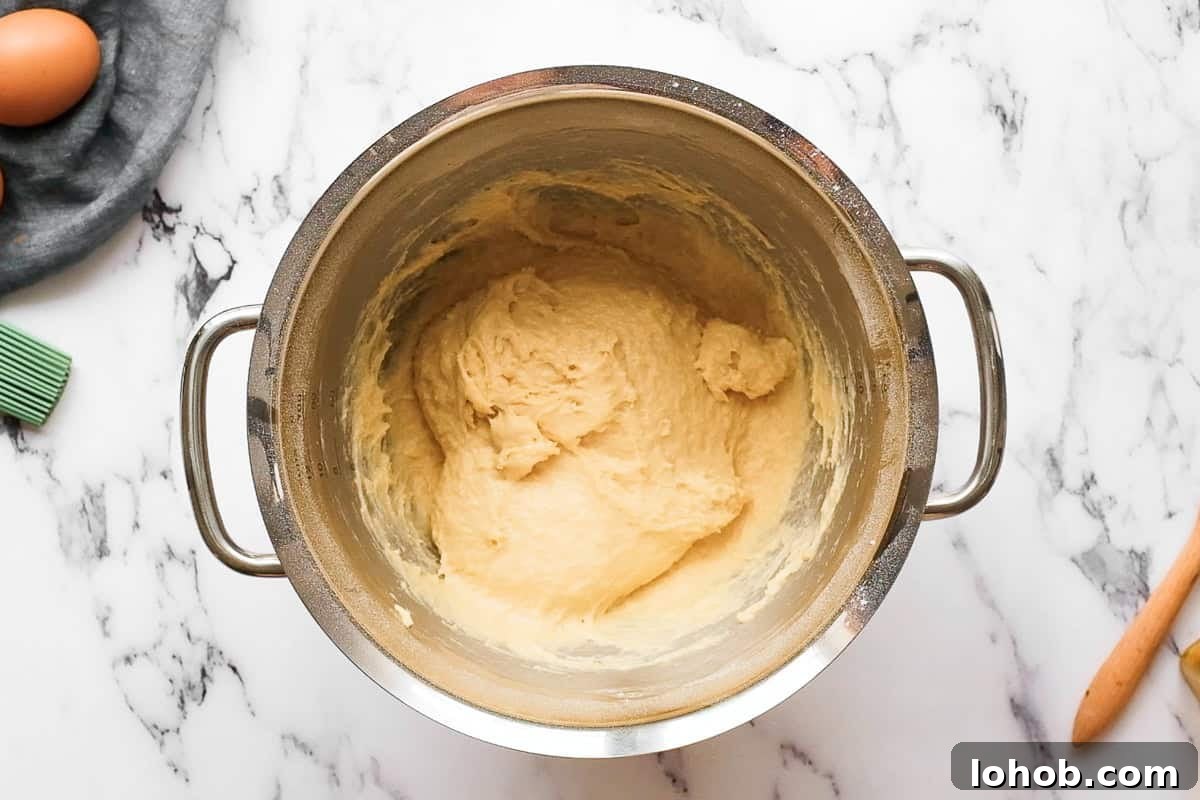
Knead until the dough forms a smooth, soft ball that pulls away from the sides of the bowl.
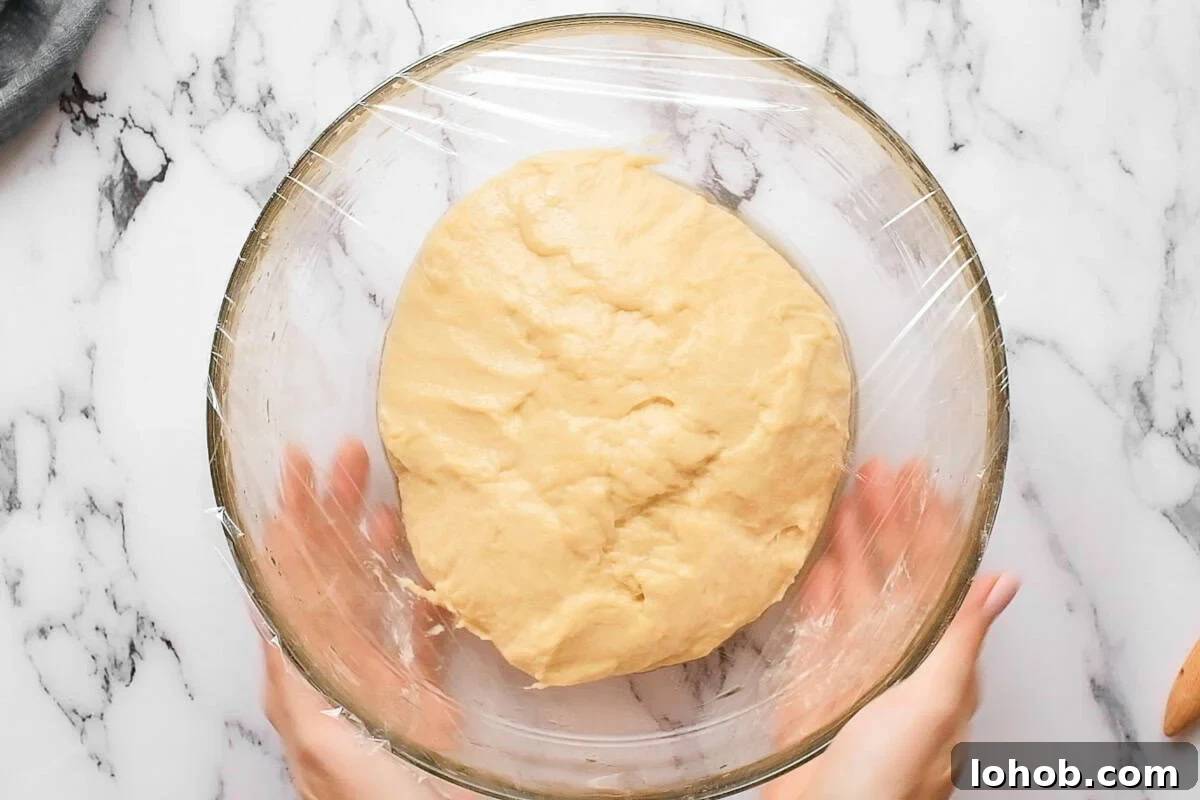
Step 3: First rise
Place the dough in an oiled bowl, cover, and let it rise in a warm spot until doubled in size—about 1–2 hours depending on temperature.
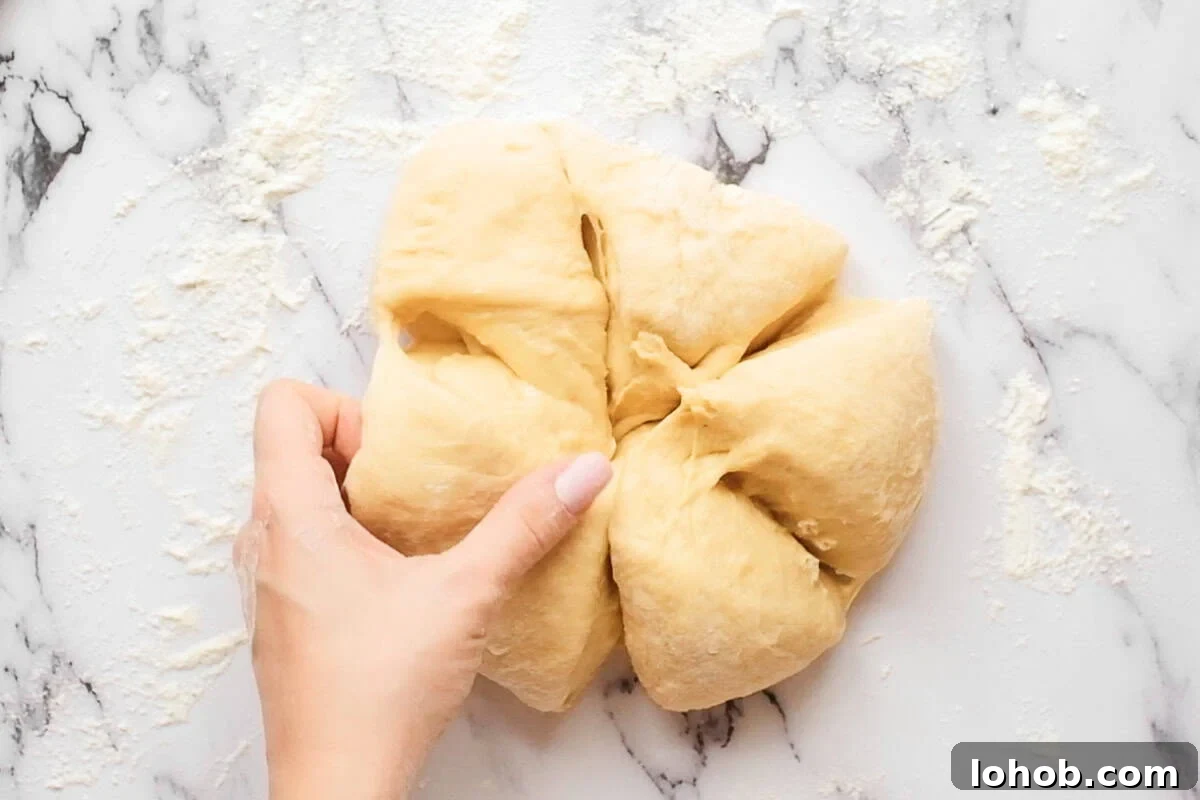
Step 4: Braid the dough
Punch down the dough and divide it into six equal pieces. Roll each into ropes and braid using an over-under pattern to form the loaf.
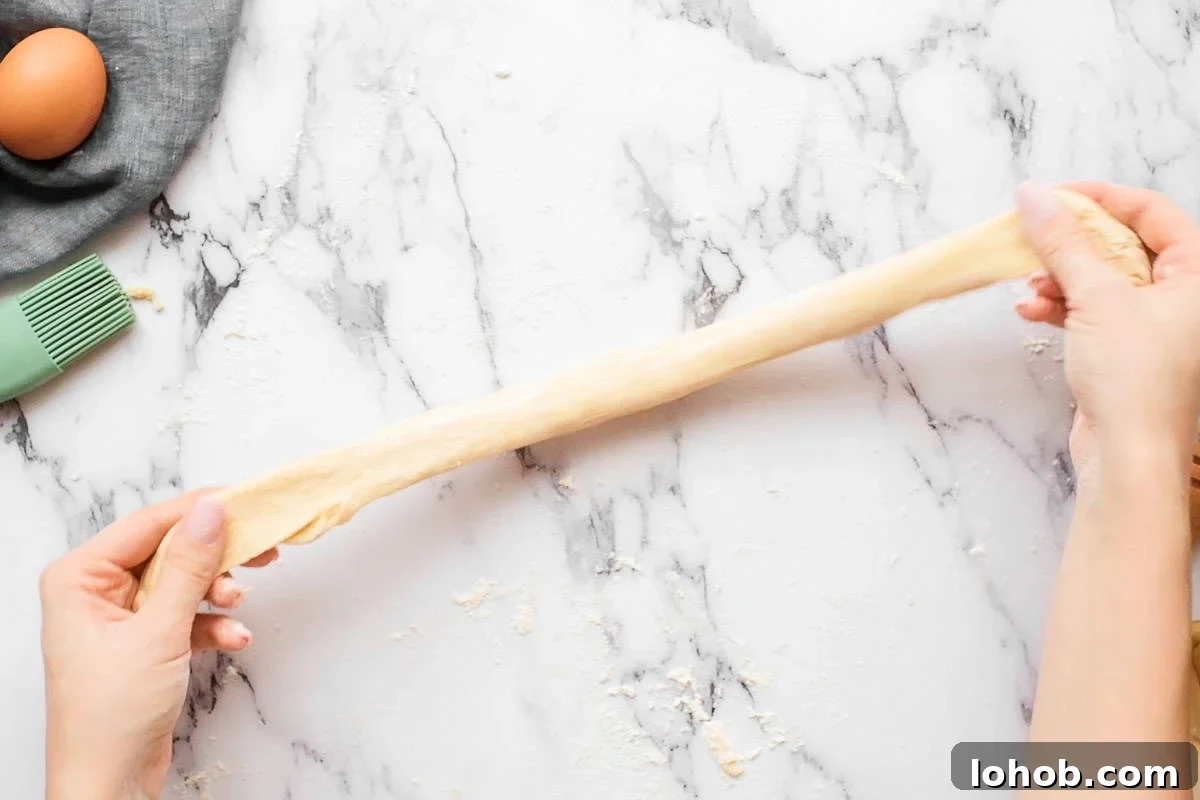
Roll the ropes to even length—about 12–15 inches—tapering the ends slightly so the braid looks balanced.
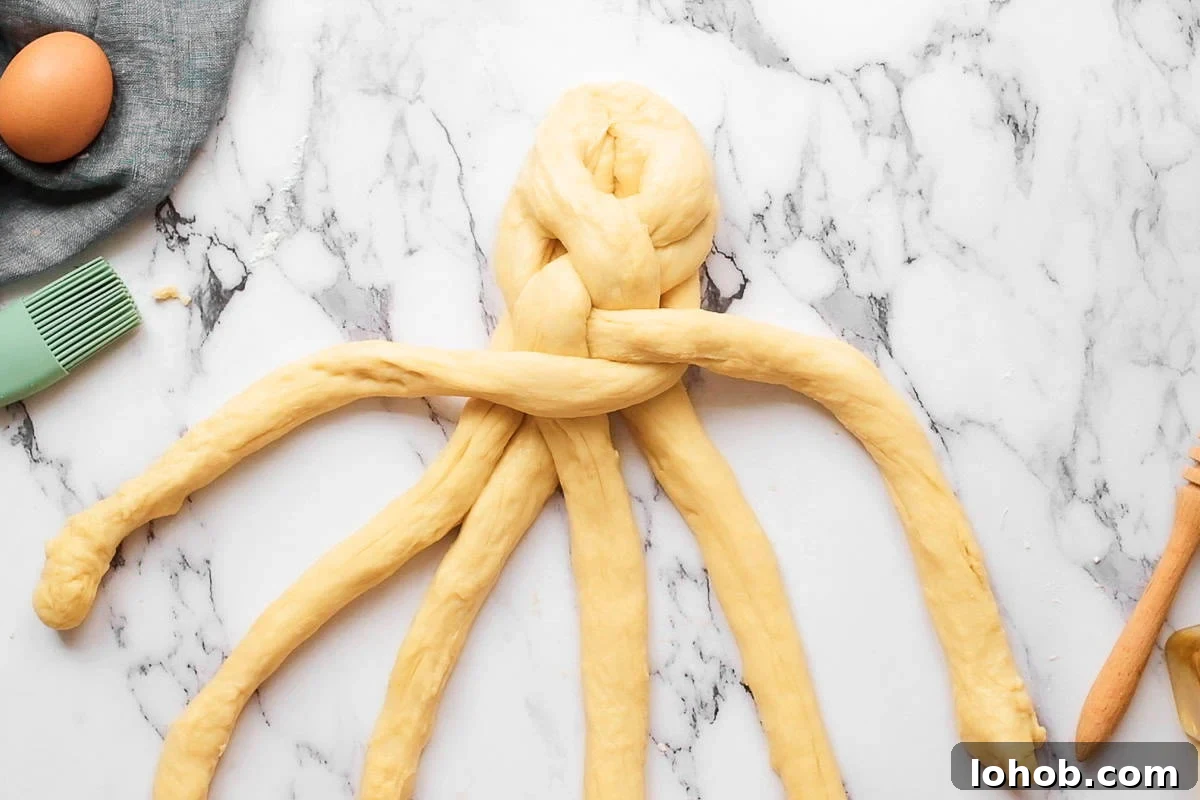
Weave the ropes together, sealing the ends and tucking them underneath for a neat finish.
Step 5: Second rise
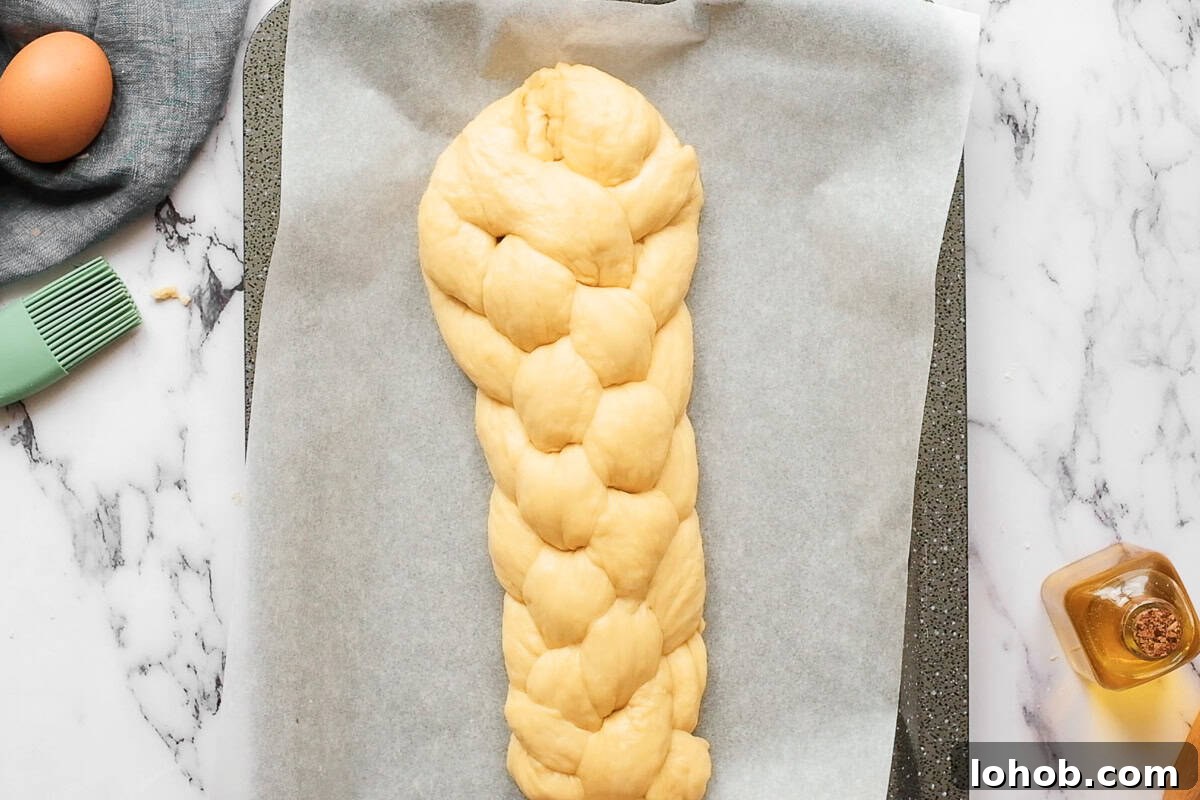
Place the braid on a parchment-lined sheet, cover loosely, and let it rise again until puffy—about an hour.
Step 6: Egg wash and bake
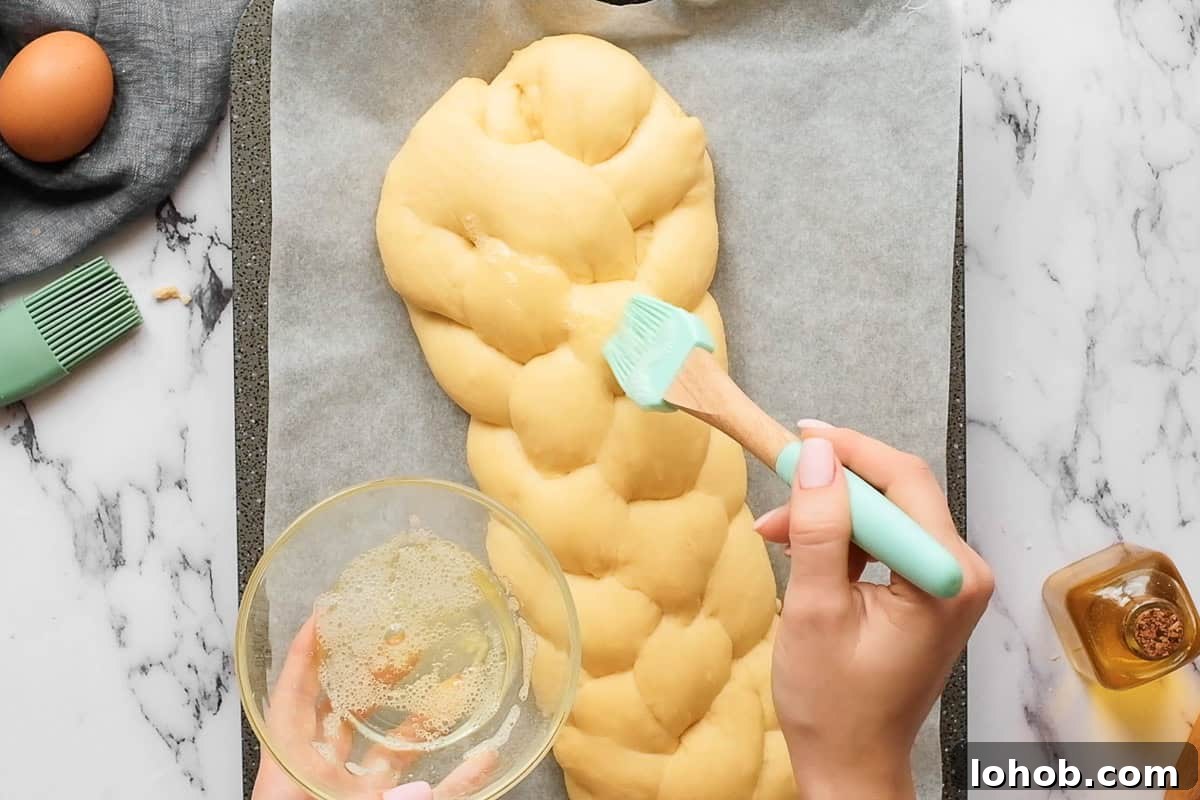
Brush with an egg white diluted with a little water for a glossy finish. Bake at 350°F until deeply golden, rotating the pan halfway through. Let cool on a rack before slicing.
Tips for Perfect Challah Every Time
After making this loaf many times, these tips help ensure reliable results:
Extra shine: Brush a second light coat of egg wash halfway through baking for a deeper gloss.
Be patient with rising: Allow both rises to reach the suggested size for an airy texture.
Practice braiding: If a six-strand braid feels daunting, start with a three-strand braid until you’re comfortable.
Flour sparingly: The dough should be soft and slightly tacky; add flour gradually to avoid a dry loaf.
Ways to Enjoy Challah Bread
Challah is delicious on its own and shines in many applications:
- French toast: Thick slices make custardy, indulgent French toast.
- Sandwiches: Use challah for elevated sandwiches or grilled cheese.
- Bread pudding: Transform day-old challah into a rich, custard-based dessert.
- Sweet or savory: Serve with butter and honey, or alongside stews and soups.
FAQs About Making Challah Bread
Answers to common questions that help when making homemade challah:
Yes. You can mix and knead by hand; plan on about 10–12 minutes of kneading to reach a smooth, elastic dough.
After dissolving the yeast in warm water, it should become foamy within 5–10 minutes. If it does not, the yeast may be expired.
Yes. After braiding, freeze the loaf on a sheet until firm, then wrap and store in a freezer-safe bag. Thaw and allow to rise before baking.
Density usually results from under-kneading or insufficient rising. Knead until smooth and allow the dough to double during both rises.
Yes. Add 1–2 tablespoons more honey to increase sweetness and deepen the crust color.
If you try this Challah Bread recipe, please leave a star rating and share how it went in the comments. Thanks for visiting!
Challah Bread
Ingredients
- 1/4 ounce active dry yeast
- 1 cup lukewarm water
- 4 1/2 cups all-purpose flour
- 2 teaspoons salt
- 1/4 cup honey
- 2 large eggs
- 1 large egg yolk (reserve white for wash)
- 1/4 cup vegetable oil
- 1 egg white (for brushing)
Instructions
-
Sprinkle 1/4 ounce active dry yeast over 1 cup lukewarm water and swirl to dissolve. If it does not become frothy within 5–10 minutes, the yeast may be inactive.
-
In a stand mixer bowl, combine 4 cups of flour and 2 teaspoons salt; reserve 1/2 cup flour for adjusting dough if needed.
-
Add 1/4 cup honey, 2 eggs, 1 egg yolk, and 1/4 cup oil. Stir to make a shaggy dough, then pour in the yeast mixture and combine.
-
Using a dough hook, knead on low for 6–8 minutes until the dough is smooth and forms a ball. Add reserved flour a spoonful at a time if the dough is overly sticky.
-
Place dough in an oiled bowl, cover, and let rise in a warm spot until doubled, about 1–2 hours.
-
Punch down the dough, divide into six equal pieces, and roll each into 12–15 inch ropes. Braid by pulling the far right rope over two, under one, then over two, repeating until the loaf is formed. Seal and tuck the ends underneath.
-
Place the braid on a parchment-lined sheet, cover loosely, and let rise until puffy, about an hour.
-
Preheat oven to 350°F. Mix the reserved egg white with a tablespoon of water and gently brush the loaf, taking care not to deflate it.
-
Bake 25–35 minutes, rotating halfway, until the loaf is deeply browned. Cool on a rack before slicing.
Notes
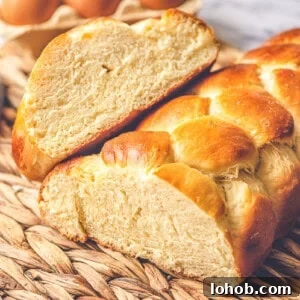
Allow the bread to cool completely before slicing. Store in an airtight container; baked bread freezes well when wrapped tightly.
Nutrition
Nutrition information is an approximation.