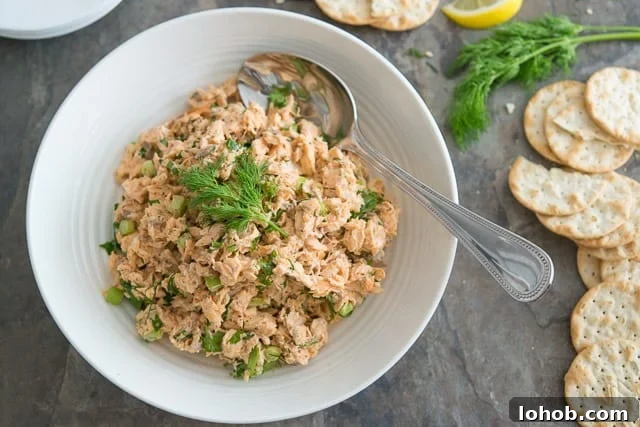
This salmon salad is quick to make and keeps well in the fridge. It’s versatile—great on crackers, in wraps, stuffed into avocado halves, or served over greens—and offers bright crunch from celery and fresh herbs with a creamy, tangy dressing. Ready in about 20 minutes.
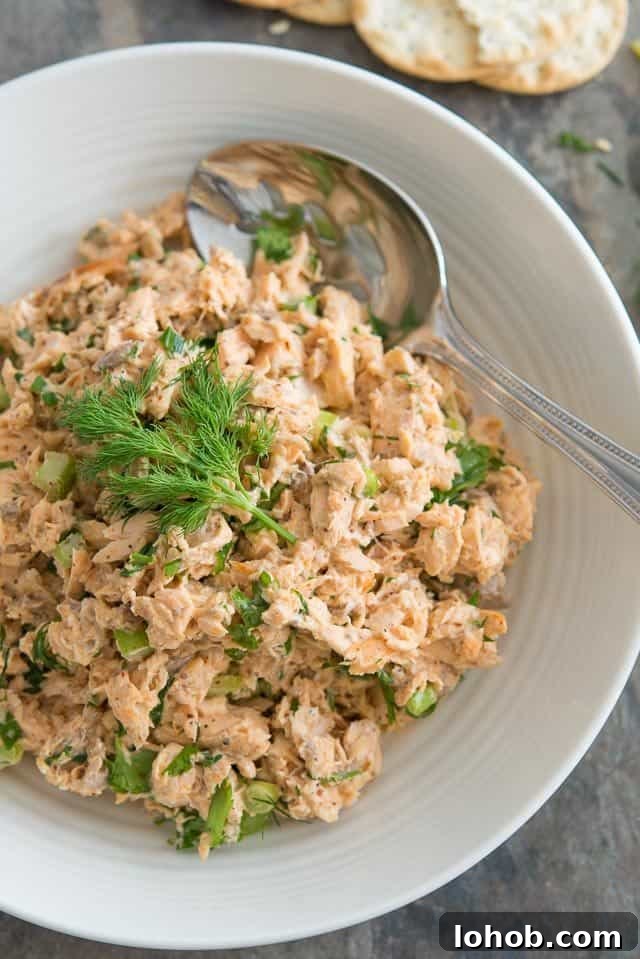
While tuna salad is often the default seafood spread, salmon salad brings better flavor and nutritional advantages. Salmon contains heart-healthy omega-3 fats and generally has lower mercury levels than many tuna options, making it a smart everyday choice.
I first fell for salmon salad after sampling it at my grocery store years ago. I came home with a tub and quickly started making my own versions to save money and adjust the seasoning to my taste. Now it’s one of our go-to protein salads alongside egg salad, chicken salad, and shrimp-avocado salad.
Unlike potato or pasta salads, protein-based salads like this one are ideal for sandwiches, wraps, and light bowls, giving you lots of serving options. Below you’ll find tips for the best results, ingredient notes, serving ideas, and a clear step-by-step method.
Tips for Best Results
Use properly cooked salmon – The foundation of a great salmon salad is moist, tender fish. Avoid overcooking; aim for about 140°F for a fully cooked fillet, or 125°F if you prefer it slightly medium for extra tenderness. If your salmon is overcooked, the salad can help salvage texture, but fresh, gently cooked fillets are ideal.
Choose fresh herbs – Fresh dill, parsley, and scallions make a noticeable difference. Herbs lose flavor quickly in the fridge, so buy them close to the time you plan to prepare the salad.
Let it rest – The salad is delicious right away, but letting it sit for 15–20 minutes helps the dressing meld with the fish and vegetables for a more cohesive flavor.
Step by Step Overview:
Start by cooking salmon using your preferred method—baked, grilled, poached, or pan-seared. The cooking method won’t change the final result much since you’ll flake the fish. If pan-searing, cook over medium-high heat for roughly 5–10 minutes depending on thickness, or bake at 425°F for about 12–15 minutes until the interior is done.
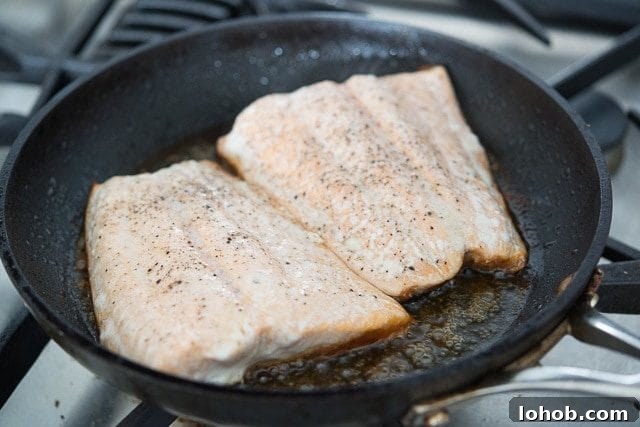
After cooking, let the fillets cool to room temperature while you chop the vegetables and mix the dressing.
Can you use canned salmon?
Fresh salmon gives the best texture and flavor, but canned salmon works well and yields a convenient, tasty salad. Choose boneless varieties if you prefer not to pick out small bones. Canned wild or sustainably sourced brands can be a good, economical option.
Does wild vs farmed matter?
Any salmon will work—wild, farmed, fresh, or previously frozen—but flavors and prices vary. Farmed Atlantic salmon is often more moist and budget-friendly. Among wild fish, King salmon has richer flavor due to higher fat content, though it can be expensive.
While the fish cools, prepare the mix-ins. I like sliced scallions, chopped celery, fresh dill, and parsley for bright flavor and crunch:
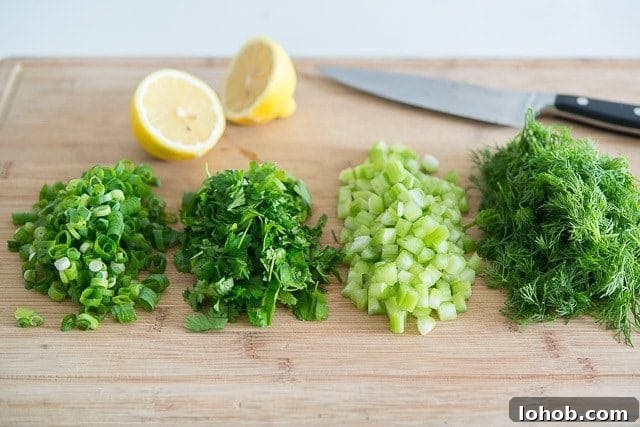
You can substitute minced shallot or red onion if you prefer a sharper bite, but scallions add a mild, fresh onion note that complements the herbs.
Whisk the dressing in a large bowl with mayonnaise, smoked paprika, cayenne, lemon juice, Dijon mustard, salt, and black pepper.
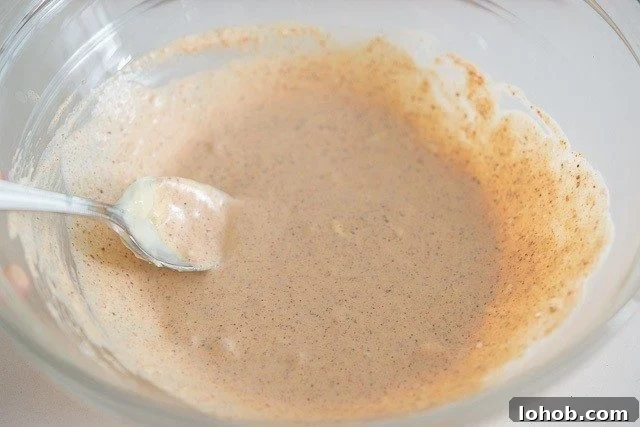
If you have time, homemade mayonnaise offers excellent flavor, but a good-quality store-bought mayo works perfectly. If you don’t have lemon juice, a splash of red wine vinegar can substitute.
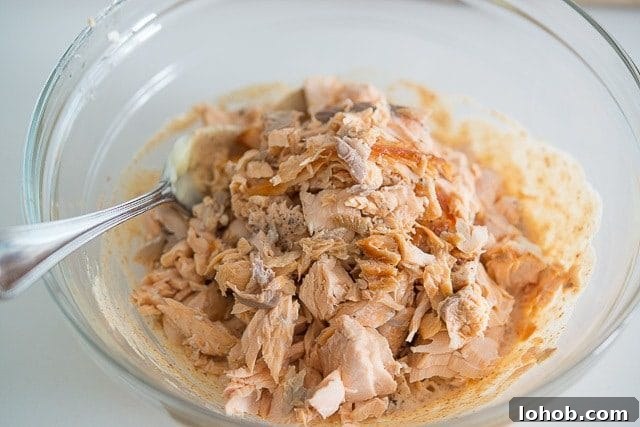
Flake the cooled salmon with a fork and add it to the dressing:
Toss in the chopped herbs and vegetables:
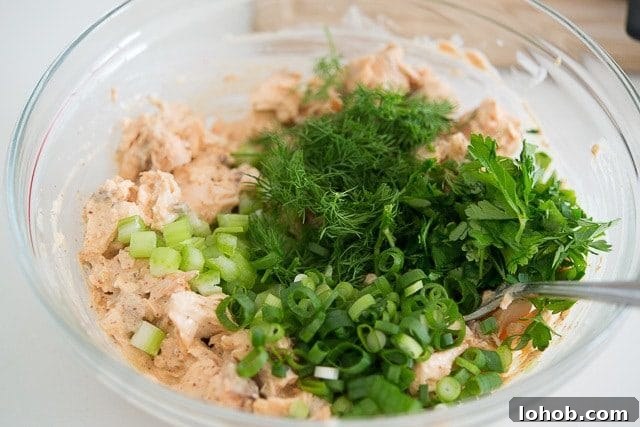
Stir to combine, then taste and adjust seasoning—salt, black pepper, or another squeeze of lemon as needed. Flavors improve after resting for a short time.
Suggestions for How to Serve It
Here are a few serving ideas:
- Spread on crackers or water crackers for an easy appetizer.
- Fill a tortilla wrap with salmon salad plus lettuce, tomato, sliced red pepper, or avocado for a portable lunch.
- Serve in endive leaves or butter lettuce cups for a light starter.
- Stuff into avocado halves for a low-carb meal.
- Top cooked quinoa or other grains to make a nourishing grain bowl.
- Use as you would egg salad in sandwiches.
- Place over salad greens and drizzle with a lemon vinaigrette.
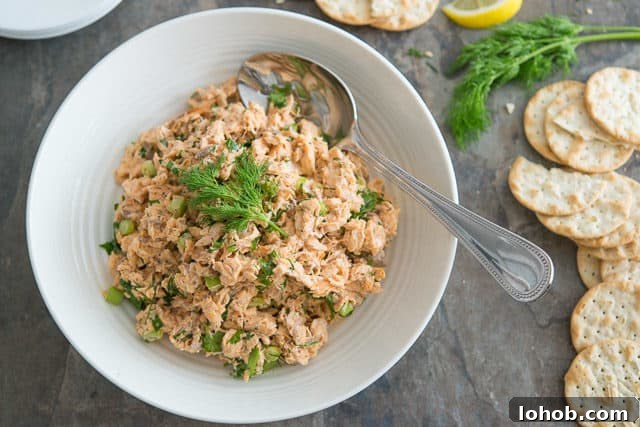
This salmon salad is a versatile, protein-rich recipe that’s great to keep on hand for quick meals and snacks. Enjoy!
Recipe Tips and FAQ
Store in an airtight container in the refrigerator for up to 3 days.
Freezing is not recommended; the herbs and celery will lose texture and color after thawing.
Tried this recipe? Leave a rating and comment below to share your variations and serving ideas.
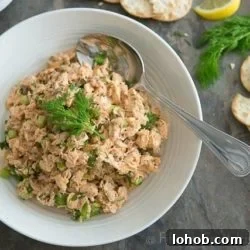
Salmon Salad
reviews
Leave a Review »
Ingredients
- 2 lbs salmon
- 1/3 cup sliced scallions
- 1/3 cup loosely packed fresh dill chopped
- 1/3 cup chopped celery
- 1/3 cup chopped parsley
- 1/4 cup mayonnaise
- 1/4 tsp smoked paprika
- 1/4 tsp cayenne pepper
- 2 tbsp fresh lemon juice
- 2 tsp Dijon mustard
- salt
- black pepper
Instructions
-
Season the salmon with about 1 tsp salt and 1/2 tsp black pepper, then cook using your preferred method. Baking at 425°F for 12–15 minutes or pan-searing for 5–10 minutes (depending on thickness) works well. Cook until the interior reaches about 140°F, then flake the salmon with a fork and discard the skin.
-
In a large bowl, whisk together mayonnaise, smoked paprika, cayenne, lemon juice, Dijon mustard, and a bit of salt and pepper. If you already salted the fish, start with about 1/2 tsp salt and 1/4 tsp black pepper in the dressing and adjust later.
-
Add the flaked salmon and the chopped scallions, dill, parsley, and celery to the bowl. Toss gently to combine and taste; adjust salt, pepper, or lemon as needed.
-
Serve immediately warm or refrigerate until chilled. Store leftovers in an airtight container for up to 3 days.
Notes
Salt amounts depend on how the fish was seasoned or whether canned salmon already contains salt. Adjust seasoning to taste after combining the salad.
Storing leftovers: Keep in an airtight container in the fridge for up to 3 days.
Freezing: Not recommended; texture and color will suffer.
Nutrition
Nutrition is estimated using a food database and is intended as a guideline for informational purposes.