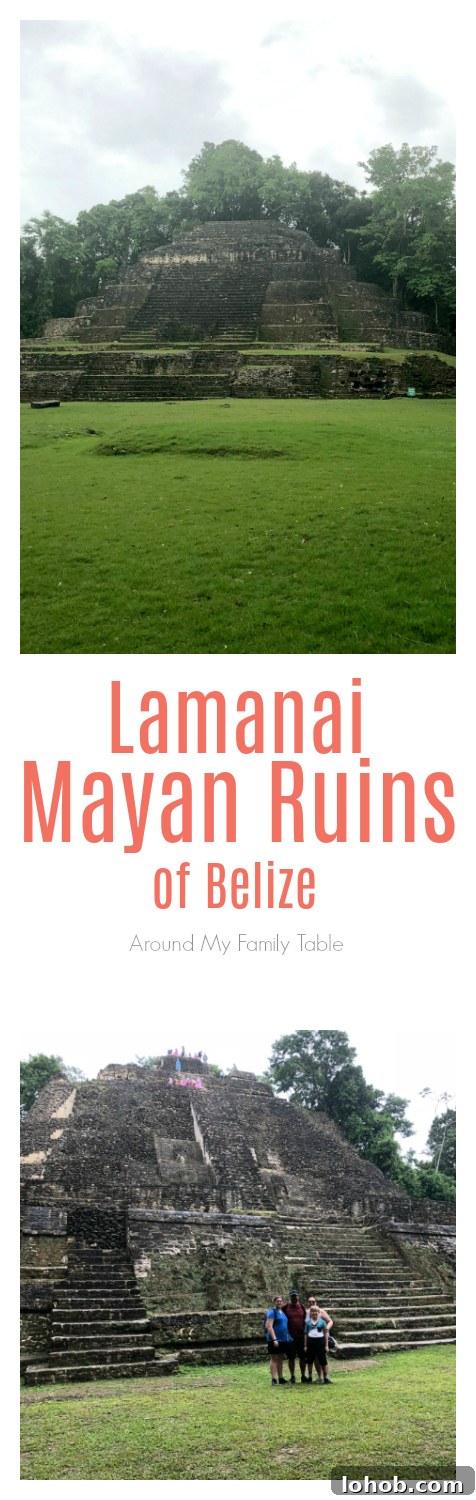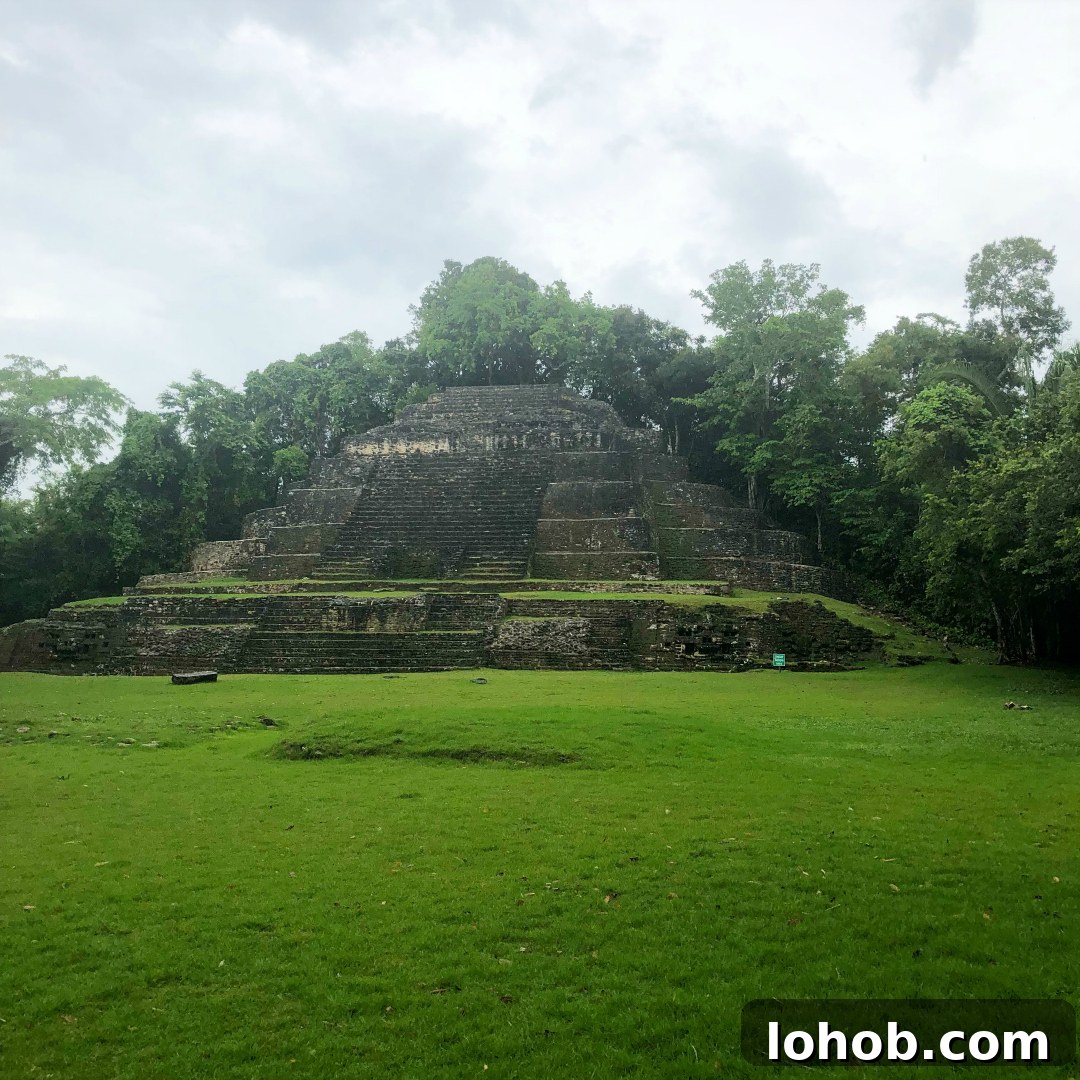
On a Western Caribbean cruise we took an excursion to see the Lamanai Mayan Ruins of Belize. It was nothing like I expected and far better than I could have imagined. Lamanai, meaning “submerged crocodile,” is an ancient city of ruins named for the reptiles that inhabit the nearby New River.
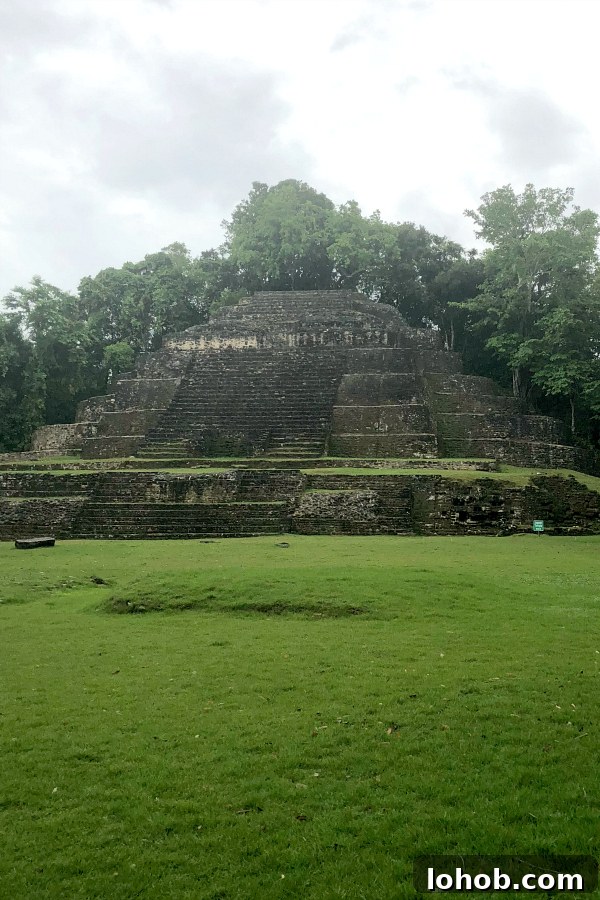
Lamanai Mayan Ruins of Belize
We explored three main temples at Lamanai: the Jaguar Temple, identified by its boxy jaguar motif; the Mask Temple, featuring a striking 13-foot stone mask representing an ancient Maya ruler; and the High Temple, which rewards visitors with a sweeping panoramic view from its summit.
We nearly canceled our visit because it was pouring rain. It was the Belizean monsoon season and we were in the rainforest, so heavy showers were to be expected. We had a 30-minute speed boat ride down the New River, and that leg of the journey was rough enough that, for a while, we wondered if we should turn back.
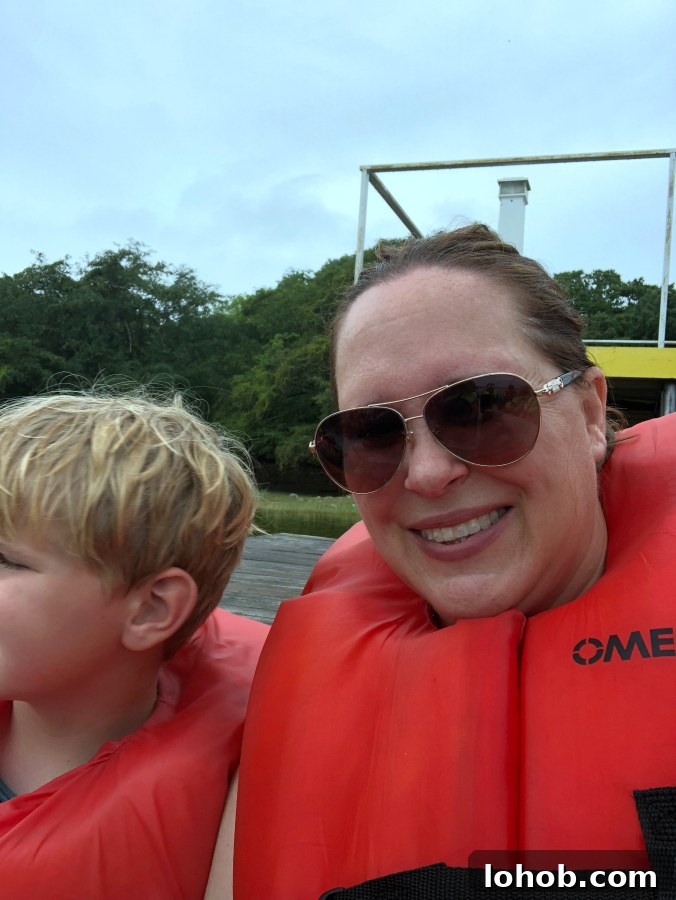
Conditions were so bad we didn’t take photos during the boat ride. Our guide stood at the front of the boat in the rain and yelled, “Let the tour begin,” just as lightning split the sky and thunder crashed. It was dramatic — and uncomfortable — but once we reached the site the rain subsided and we were able to leave our rain gear behind to walk the grounds.
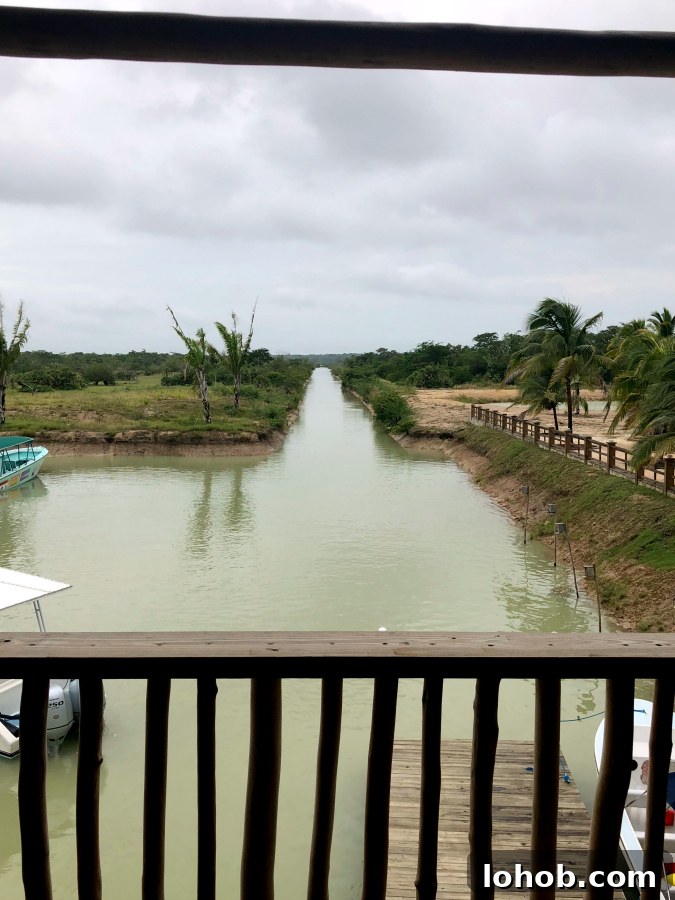
How to reach Lamanai?
From our cruise ship we traveled by bus for about an hour, then took a 30-minute speed boat down the New River. Other options include tours originating from Orange Walk Town along the river, or overland routes via dirt roads through the Mennonite community of Shipyard. The site has a small museum displaying local artifacts and giving an overview of the site’s history. We joined a cruise-organized tour, though independent tours were also operating. Lamanai wasn’t crowded — possibly because of the rain — and groups tended to stay together, so only one or two tours visited each ruin at a time.
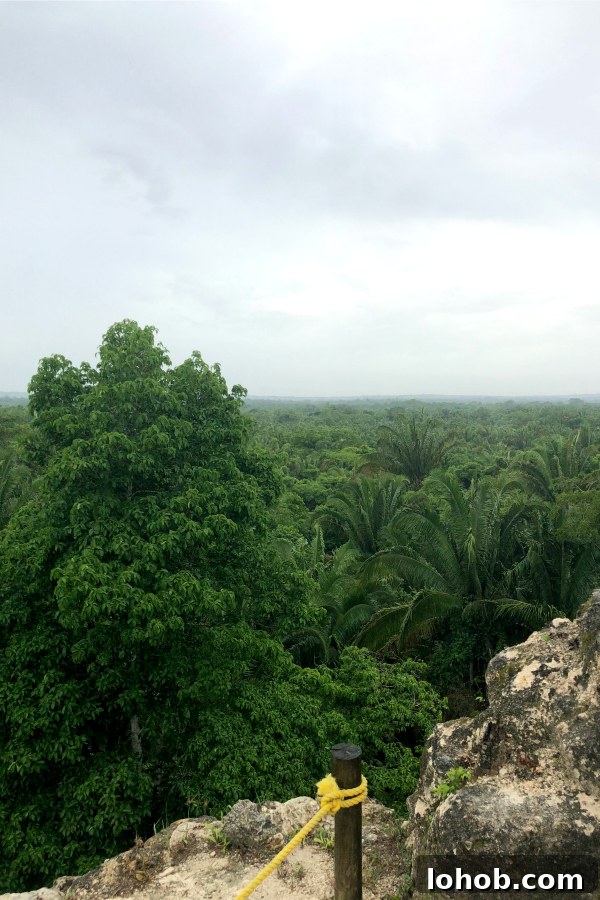
Can you climb Lamanai?
Several structures at Lamanai are climbable. Ascending the High Temple is a highlight: the climb is challenging but the views from the top are spectacular. Howler monkeys can often be heard or seen in the surrounding forest, though we didn’t encounter any during our visit.
Walking the site is generally straightforward, but the ascent to the very top of the High Temple is strenuous. The site offers a set of steps around the back with a handrail that helps, yet reaching the summit still requires careful climbing. I was unable to reach the very top due to asthma and a health issue, but my family made it and described the view as unforgettable.
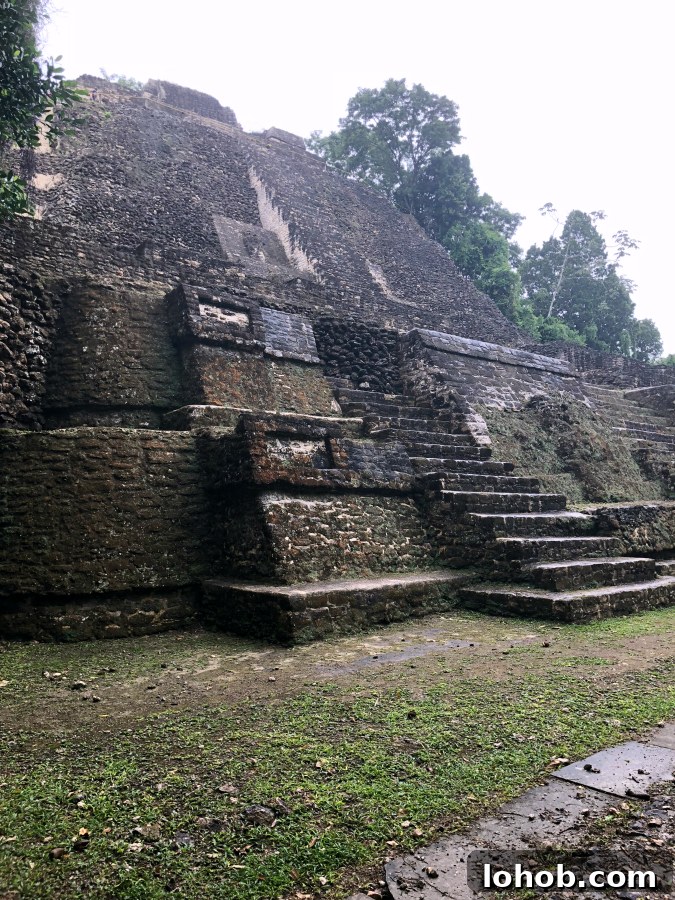
Seeing the ruins in person is a different experience than viewing photos or documentaries. The scale, craftsmanship, and atmosphere of these temples are inspiring and richly evocative of the ancient Maya civilization.
So, how old is Lamanai?
Lamanai was occupied as early as the 16th century BC and remained inhabited until the end of the 10th century AD, reflecting a remarkably long span of cultural development and change.
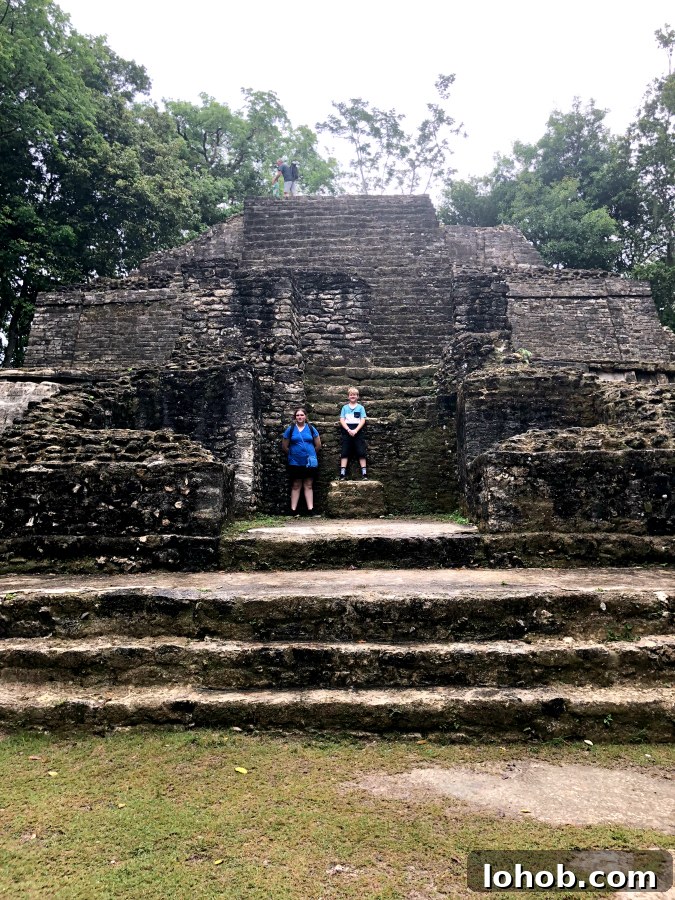
Although clouds lingered when we arrived, the weather cleared during our visit, bringing cooler July temperatures. It was humid but not uncomfortably hot, which made exploring more pleasant.
This visit is one we’ll never forget. Have you ever visited Lamanai or another Maya ruin?