How to grow Puntarelle
In my last blog post I described ways to use puntarelle in the kitchen. In this article I explain how to grow them successfully in the garden. We found puntarelle straightforward to cultivate last year, even with a lot of rain and limited sun, and these notes reflect that experience.
If you want to try growing puntarelle in your garden, read on for practical, hands-on guidance based on our season.
Puntarelle seeds & stockists
The first step is to obtain seeds. I was fortunate to receive a packet from an Italian friend, but several specialist seed suppliers carry puntarelle varieties, often under names such as Cicoria Catalogna Puntarelle di Brindisi. Availability varies by country, so search for puntarelle, chicory catalogna, or puntarelle di Brindisi through reputable seed suppliers in your region.
Seed packet instructions can differ between suppliers and even between a company’s website and the reverse of their packets. The recommendations below reflect our single-season experience on the Llŷn Peninsula at roughly 52°N. You may need to adapt timings and methods to suit your local climate and conditions.
Site
Puntarelle prefer well-drained, fertile soil with full sun or partial shade for part of the day. We planted ours in soil left after the potato harvest, amended with young bracken and homemade compost. This provided good structure and nutrients, helping plants establish quickly.
Temperatures
Ideal growing temperature is around 15°C. Some seed suppliers state puntarelle will tolerate temperatures down to 5°C, but we found that frost and freezing conditions damage the tender shoots. Protect young plants from hard freezes or delay sowing if severe cold is expected.
Sowing
Sow between June and early September for an autumn and winter crop. Sowing later in September may not produce usable shoots before cold or wet conditions set in. There’s no benefit to sowing much earlier in the year when other vegetables are available; instead, focus on staggered sowings through the recommended window to extend harvest times.
We started seedlings in modules, placing two to three seeds per cell and later thinning to the strongest seedling. Modules help protect young plants from slugs and snails early on. Direct sowing into the ground is possible, but in our garden we found module germination reduced losses to pests and gave stronger transplants.
Transplanting
When seedlings reach about 7–10 cm tall, transplant them to their final spacing at roughly 30 cm apart in all directions. Keep the beds weeded and water regularly to help plants bulk up. Good soil preparation and consistent moisture encourage steady growth and healthy heads.
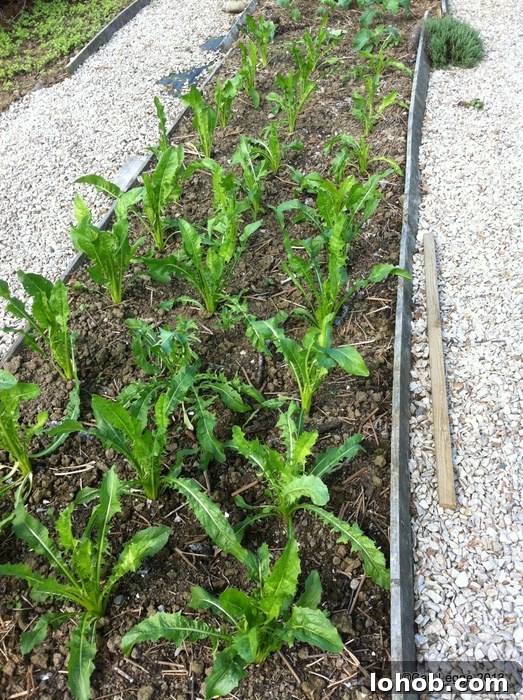
The top image in this article shows plants about a month after sowing, illustrating a healthy early stage before the shoots form fully.
Problems
We experienced few major problems, but small slugs and snails do feed on the leaf ribs and emerging shoots. Damage was limited and manageable, but it’s worth checking plants before harvest. Another issue we observed was internal rot of the shoots; the ribbed inner structure can brown and decay if shoots are left too long in the ground or if conditions are persistently wet. Succession sowing and timely harvesting reduce the risk of rot.
Harvest
Puntarelle plants typically take around two months to reach maturity. Harvest the shoots when they measure between about 5 cm and 20 cm tall. We began picking from mid-September onwards. With appropriate frost protection and sequenced sowings, you can extend the harvest into winter and, in mild areas, into the following year.
I harvested leaves in December on one occasion, but the shoots had passed their prime by then. I also experimented with leaving the cut stumps in the ground to see if they would reshoot. Some regrowth occurred, but it did not result in commercially useful shoots in my climate; your results may vary.
Once harvested, puntarelle can be prepared and enjoyed fresh in a variety of Italian-inspired recipes. They offer crisp texture and a pleasantly bitter, peppery flavour that pairs well with oil, garlic, anchovy or lemon-based dressings. Buon appetito!
Notes: adjust sowing dates and protection strategies to your local climate. Successional sowing and careful monitoring for slugs and internal rot are the best steps to ensure a steady supply of good-quality shoots.