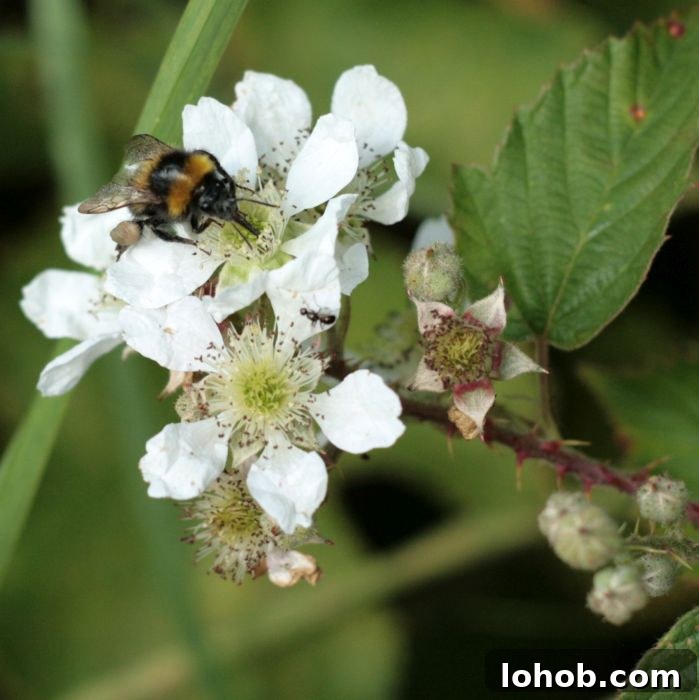
Our blackberry wine is a pleasure to make and drink. It has a rich, smooth character reminiscent of a light port, with a deep, ripe fruit flavour. This year the blackberries have appeared earlier than usual for many people, so here is the recipe I use for a straightforward, reliable batch.
The method is simple: pick, mash, ferment the fruit’s natural sugars, ferment on added sugar, rack until clear and then age until the flavours develop.
Interested in trying it? Read on…
Blackberry wine recipe
Equipment you will need:
- A food-grade bucket or large bowl with a lid, or another way to cover during the initial vigorous fermentation.
- A large plastic or metal spoon or paddle for stirring.
- Something to strain the wine after the first fermentation — a funnel with a filter, sieves, or muslin will work.
- One or two glass or plastic demijohns for the later fermentation. Five-litre square water bottles make good substitutes.
- An airlock to prevent contamination while allowing carbon dioxide to escape. A loosely fitted cotton wool plug secured with cling film and an elastic band can be used as an alternative.
- A wine bottle to hold any excess ferment.
- Tubing to transfer wine between containers when racking.
- A thermometer.
- Six bottles and corks or a 5-litre wine bag/box to store and serve the finished wine.
This recipe fills one 4.5-litre demijohn, which yields about six standard bottles. We often make larger batches; last year we did about 15 litres.
Ingredients
1.75 kg blackberries (a little more or less is fine)
1.5 kg granulated sugar
4.5 litres boiling water
2 teaspoons pectic enzyme (helps break down pectin so the wine clears)
Yeast nutrient — follow the product instructions. As an alternative, dissolve 1/4 teaspoon Marmite, yeast extract or malt syrup in a little hot water.
1 teaspoon wine yeast
A suitable sterilising solution for equipment
Method
Read the full method before you begin, then thoroughly clean, sterilise and rinse all equipment.
Pick the fruit when fully ripe and preferably on a dry, sunny day. Give the blackberries a gentle wash and remove obvious stems, leaves and any insects, but don’t worry about removing every speck.
Place the blackberries in the bucket and lightly mash them with a potato masher or rolling pin.
Pour on the 4.5 litres of boiling water and stir. Check the temperature and wait until it falls below 21°C (70°F). Add the pectic enzyme, stir, cover and leave for at least 8 hours.
The next day, add the yeast nutrient (or substitute) and the wine yeast. Cover again but not tightly — the fermentation can become vigorous and a sealed, rigid lid may be unsafe. Keep the bucket in a warm spot, ideally 20–25°C. Within 24 hours you should see fermentation begin, with bubbles and a frothy surface.
Stir daily with a sterilised spoon or paddle for the first 4–7 days.
When the initial vigorous fermentation slows, strain the liquid off the fruit. Place the sugar into a clean, sterile demijohn. Using your funnel or filter, pour the ferment into the demijohn in stages, swirling to help the sugar dissolve. Top up to the shoulder with ferment or water and fit the airlock.
If you have spare ferment, keep it in a cleaned and sterilised bottle sealed with cotton wool and cling film; you can use this to top up the demijohn as you rack off sediment. Leave the demijohn and any spare ferment in a warm place where the airlock will show ongoing gas release.
As fermentation slows further, the wine will begin to clear and sediment will form at the bottom of the demijohn. That sediment is fruit solids and spent yeast cells; it’s good practice to remove the wine from it periodically — a process called racking.
Racking schedule can vary. For example, a batch made in September might have a first racking in November, another in March, and be bottled in June. Tasting samples each time you rack will show how the wine evolves: early on it will be sweet and simple, similar to a concentrated berry drink, then gradually it becomes more complex and full-bodied. Patience improves the final result.
When you are satisfied with the flavour and clarity, rack the wine for the final time into sterilised bottles and seal with sterile corks, or transfer into a sterilised 5-litre wine bag in a box for storage and serving.
Enjoy making your wine. I hope it turns out well — let me know how you get on.
Iechyd da!
Please also consider sustainable foraging practices when gathering wild fruit; be responsible and respectful of the environment.