Sugar Free, Low Carb & Keto Marshmallows. Very LOW CALORIE and ZERO CARBS. Plus DAIRY-FREE.
This recipe is different from most: it doesn’t require prolonged whipping or a heavy-duty stand mixer. A hand-held electric whisk is sufficient and you’ll only need a minute or two of active whipping.
The method is simple but fast—this marshmallow sets quickly, so prepare your workspace and have all ingredients and tools ready before you start. No thermometer required.
You’ll be surprised how quickly this keto-friendly marshmallow comes together, and you can enjoy it almost immediately.
Despite multiple attempts to replace gelatine with agar-agar, I could not achieve a satisfactory result, so this recipe is not vegan.
Ingredients for Sugar Free, Low Carb & Keto Marshmallows
Gelatine powder is the key ingredient. I haven’t tested gelatine sheets, so I can’t advise on equivalent quantities.
Icing ‘sugar’ is available commercially but can be costly. For a budget option, make your own sugar-free icing sugar. Combining a small amount of pure stevia powder with icing ‘sugar’ boosts sweetness without relying heavily on erythritol, which can cause digestive issues for some people when consumed in large amounts.
Choose a high-quality pure stevia powder. Many products marketed as pure are cut with fillers. The brand I use is very sweet with minimal bitterness when used sparingly.
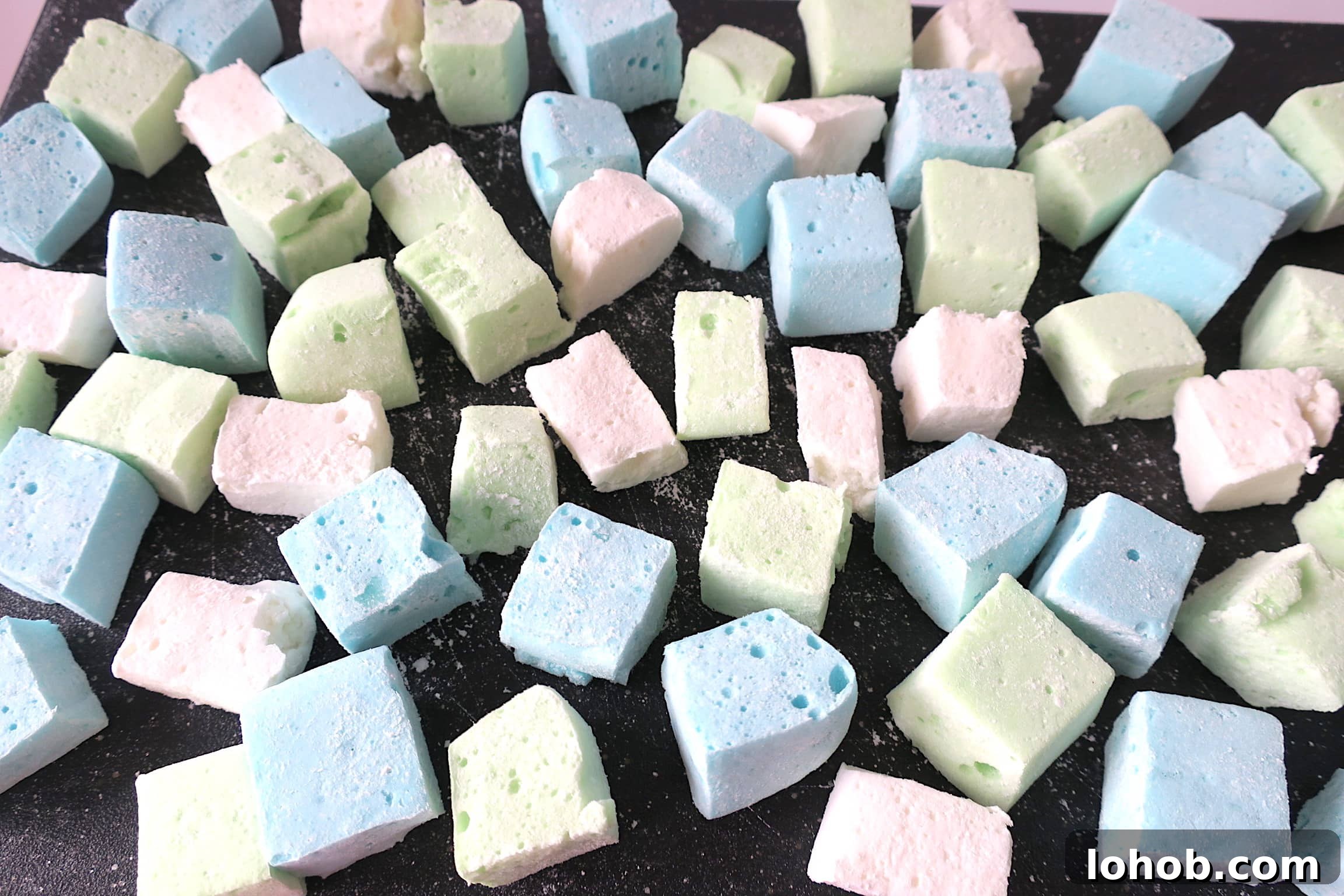
Guar Gum and glycerine are two binding ingredients not commonly found in other keto marshmallow recipes. After extensive testing, I found that together they create a springy texture similar to conventional marshmallows. If you omit them, the result will be softer and wetter and may require up to 24 hours of air-drying.
If guar gum causes digestive issues for you, you can substitute xanthan gum or glucomannan (konjac). The texture will differ but remains acceptable.
Use vanilla extract or another flavor extract to taste. Food coloring is optional but fun.
Arrowroot is a high-carb natural starch used with icing ‘sugar’ to mimic the classic powdery coating on shop-bought marshmallows. It is entirely optional; the small amount used will have a negligible effect on carb count.
This recipe takes about five minutes to make—speed is important—so read the full recipe and notes before you begin. Gather and weigh all ingredients, and lay out a mixing bowl, small pot, hand-held whisk, spatula, toothpick, and any optional food coloring.
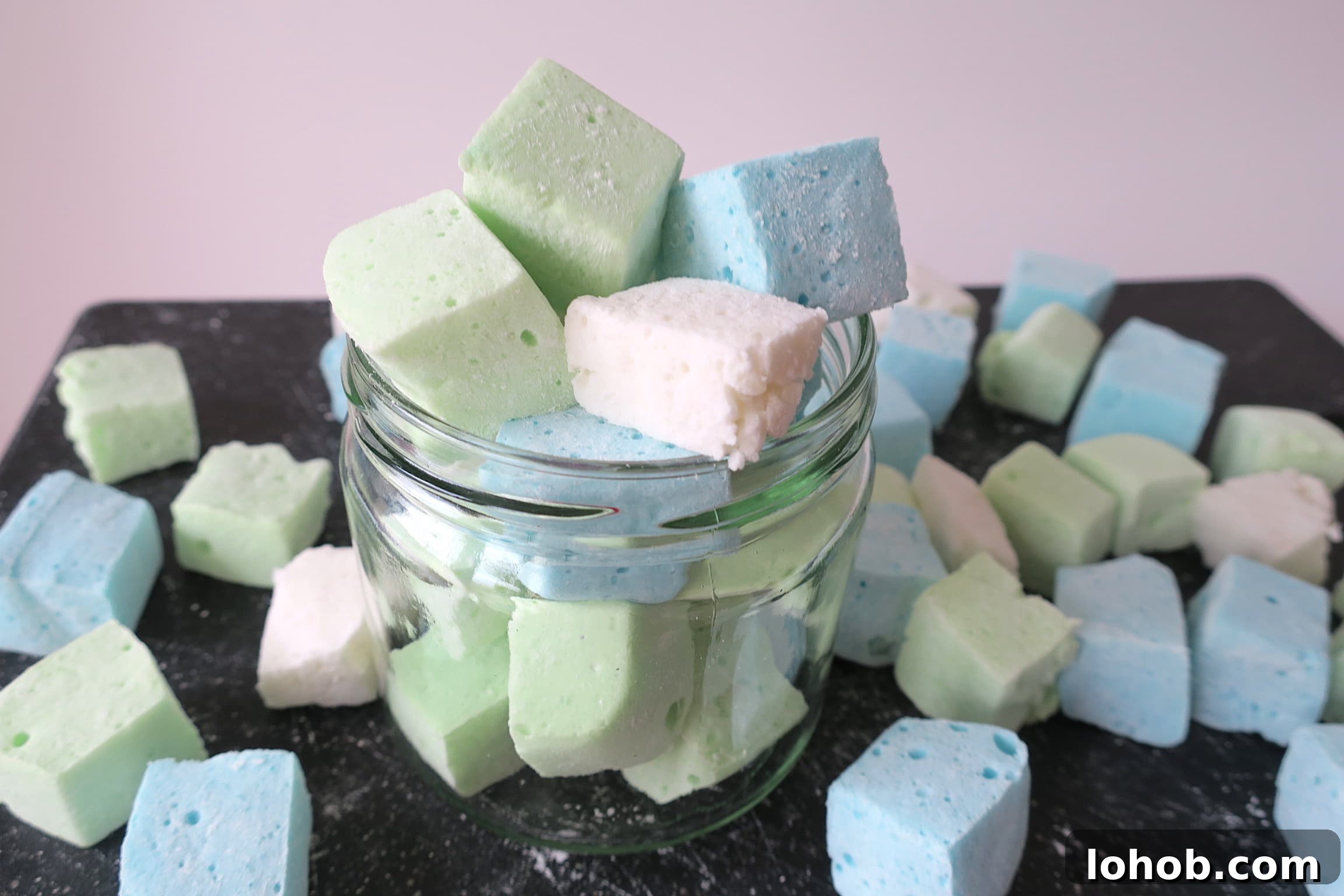
Enjoy them on their own or paired with a chocolate cream for an indulgent treat.
Enjoy!
- For the Marshmallows:
- 100g water
- 20g gelatine powder
- 1/8 tsp guar gum
- 1 tsp vanilla extract
- 8g glycerine
- 20g icing ‘sugar’ (or make your own)
- 1/2 tsp pure stevia powder
- (optional) natural gel paste food colouring
- For the (optional) powder dusting:
- 2 tsp icing ‘sugar’
- 1/2 tsp arrowroot powder
- Prepare a silicone loaf mould about 20cm x 10cm, or line a similar tin with non-stick paper and lightly grease with coconut oil.
- In a small pot, combine 50g water, the icing ‘sugar’ and glycerine. Bring to a rapid boil and let it bubble and foam for 10–20 seconds.
- Meanwhile, in a large mixing bowl pour 50g cold water, add vanilla extract and stevia powder, then sprinkle in gelatine and guar gum. Stir briefly with a fork to combine.
- Immediately pour the hot sweetened water into the gelatine mixture slowly, hand-whisking constantly to avoid lumps.
- When smooth, add a tiny amount of food colouring if desired (use the tip of a toothpick).
- Using a hand-held electric whisk, whip the mixture for 60–90 seconds, until the whisk blades leave sticky trails on the bowl sides.
- Quickly transfer the mixture into the prepared mould; it will set fast.
- After about 10 minutes, turn the marshmallow out onto a cutting board lined with non-stick paper.
- Allow it to air-dry for at least 30 minutes before cutting into squares.
- Optional: to coat, place icing ‘sugar’ and arrowroot in a zip-lock bag, add the marshmallow cubes and shake to dust.
- Store in a sealed glass jar.
Xanthan gum or glucomannan can be used instead of guar gum, though guar gives the best texture. Cutting is easiest by creating a shallow wet-knife score across the top, then opening that split with your fingers as you slice (keep the knife wet). Because ingredient amounts are small, precision scales are recommended.