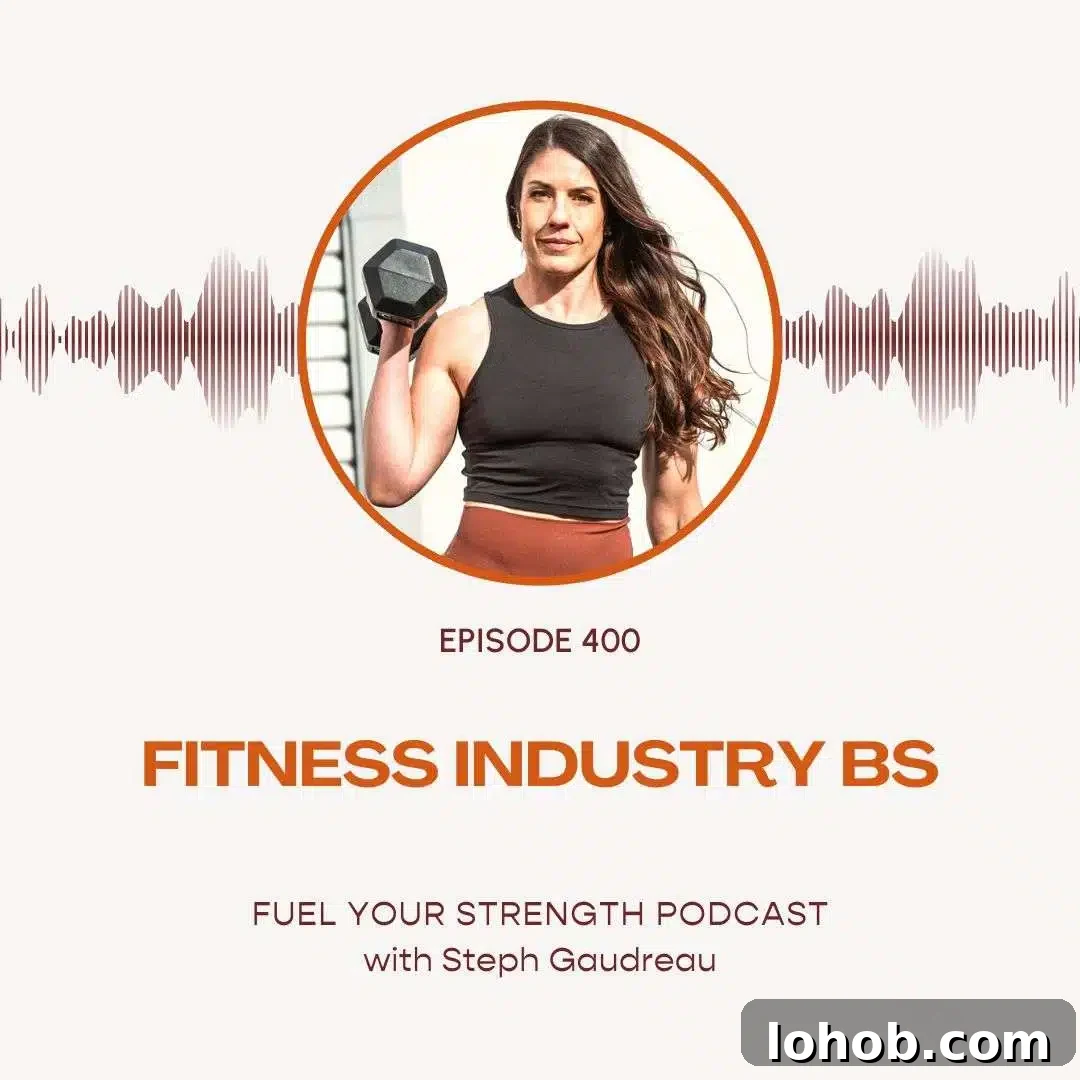
Today we’re celebrating a milestone: episode 400. Over the years this podcast has changed names and formats, but its core mission has stayed the same—helping you build strength. In this episode we look back at lessons learned, highlight people who’ve influenced the journey, and consider how the fitness conversation needs to evolve going forward.
Click play to listen right on this page, no app is needed:
Or listen on your favorite app: iTunes (Apple Podcasts) | Spotify | Stitcher
Want a free week of strength workouts? Click here to get started!
To improve the narrative around fitness we need to:
- Educate clients that fitness is not only an aesthetic goal
- Acknowledge people who have been positive influences
- Recognize that viewpoints can change over time
- Apply new research while noting gaps in current knowledge
Gauging Strength and Fitness Beyond Weight Loss
Longtime listeners know I want to move the conversation away from weight loss as the primary measure of success and toward functional markers of fitness. Shifting culture is not simple and I don’t claim to have all the answers, but coaches can make a difference by focusing on client education—explaining why different metrics matter and offering context for the approach you recommend.
It’s tempting to use familiar industry phrasing because clients expect it. Yet if we keep reinforcing narrow aesthetic goals, the broader cultural narrative won’t change. Honest, consistent education about strength, performance, and health is essential.
Changing the Culture Moving Forward
I’d like to see more inclusion of women in exercise science and sports research. Progress is happening, but much of the research is new and incomplete, so practitioners must interpret it carefully. Helping change the conversation requires nuance: incorporate current evidence, acknowledge limitations, and avoid overgeneralizing.
How can you help shift the conversation around strength? What changes do you see in the industry? Leave a comment below.
In This Episode
- Educating clients on approaches to nutrition and strength [4:30]
- Women who inspired and influenced me [18:40]
- Recognizing and embracing change [23:00]
- Looking ahead at the evolving landscape of nutrition and strength [28:15]
Quotes
“We as coaches have to be willing to do the education piece and constantly talk about why we’re not going to do things in this other way and why we’re doing things in this different way.” [4:50]
“Fitness is not a specific look. Fitness is how well you can perform a task; how well-suited to the task are you.” [12:08]
“If you need to make adjustments to your training because you’re not feeling it, that’s okay. But a lot of the things that we hear people talking about are just not grounded in what the collective body of research says.” [32:17]
Featured on the Show
Apply for Strength Nutrition Unlocked Program
Find the full show notes here
Follow Steph on Facebook | Twitter | Instagram | YouTube | Pinterest
I’d really appreciate a minute of your time to rate and review the podcast on Apple Podcasts!
Podcast production & marketing support by the team at Counterweight Creative
Support the Podcast
Get 20% off Legion Supplements with code STEPH
Get your first month of Whoop free ($30 off)
Save 10% off GORUCK with code FUELYOURSTRENGTH
Follow Steph on Instagram
Rate and review on Apple Podcasts
Related Episodes
FYS 399: Are You Overtraining?
FYS 380: From Endurance To Lifting: Top Sports Nutrition & Training Lessons
FYS 3771: Why The Fitness Industry Needs Quality Coaches
Fitness Industry B.S. Transcript — Highlights
It’s been nearly eight years since the first episode. Today marks episode 400. The podcast has gone through name changes—from Harder To Kill Radio to Listen To Your Body, and now Fuel Your Strength—but the focus has always been strength, nutrition, recovery, and how to adapt training as you approach and move beyond your 40s.
If you’re an athletic woman in your 40s who loves lifting, challenging yourself, and doing hard work, this podcast is aimed at helping you eat, train, and recover smarter so you gain strength, muscle, and energy and perform better both inside and outside the gym.
Welcome back. If you watch on YouTube, subscribe and turn on notifications. If you’re listening to audio, hit subscribe in your favorite app. I record from a small spot in my home, and you’ll notice the setup has evolved—video is back in rotation and I’m refining the recording space.
Before diving into listener questions: if you want a structured approach to build muscle, gain strength, and improve energy and performance with coaching and community, consider applying for Strength Nutrition Unlocked at StephGaudreau.com/apply.
The first listener question asks how coaches can shift the conversation away from “calories in, calories out” and narrow weight-loss terminology toward functional nutrition and strength markers. There’s no simple answer, but it starts with education. Coaches need to explain why building muscle and targeting performance matters, even when clients arrive searching for “toning” or “leaning out.”
Many coaches feel pressure to use familiar marketing language to attract clients. That’s understandable, but it perpetuates limiting narratives that are used disproportionately toward women. Shifting language and culture may require some coaches to accept losing clients who expect traditional aesthetics-focused messaging in favor of a clearer, evidence-based stance on strength and performance.
If nutrition counseling falls outside your scope or certification, stay in your lane and refer clients to qualified practitioners rather than offering low-calorie prescriptions that can be harmful. Not everyone needs to be an expert in every niche—good referrals are part of responsible coaching.
Overall, be willing to have the conversation, admit what you don’t know, look things up, and be transparent about your coaching values. Over time consistent, honest messaging can help reframe what fitness means for many people.
Listeners also asked which women influenced my path. Coaches, athletes, and peers in local communities—people like Allegra Stein, Nicole DeHart (now Nicole Cripps), Mary Everett, Sage Bergner, Amy Everett, and coach Don Fletcher—played pivotal roles by modeling strength, humility, and dedication. Their example showed what’s possible and helped shape my approach.
Another common question: if I knew then what I know now, what would I have done differently? I’d remind creators and coaches that change is normal. It’s okay to shift names, formats, and viewpoints as you learn. I also would have put less pressure on creating a viral or “perfect” product from day one—the craft improves with practice, and staying authentic mattered more than chasing charts.
Finally, listeners ask how we ended up fearful of gaining size and why the industry often sells limiting narratives to women. Historically, exercise science and sports research have underrepresented women. Progress is occurring, but the pendulum has sometimes swung to overprescriptive solutions—apps and social content that suggest deterministic month-by-month training based on the menstrual cycle despite incomplete evidence. The truth is often more individual: adjust training if you don’t feel right, but avoid prescriptive, one-size-fits-all rules not supported by robust research.
Women over 40 face additional marketing noise—products and “solutions” that prey on uncertainty in perimenopause and menopause. There’s a lot of good work happening, but also opportunistic messaging. Critical thinking, evidence-based guidance, and patience are required to separate helpful tools from gimmicks.
Strength training, progressive overload, appropriate fueling, and adequate recovery remain central across ages. The details vary by individual and life stage, but the principles are consistent: apply progressive challenge, support recovery, and track meaningful performance markers rather than binary aesthetic goals.
Personally, I’m keeping my body and mind engaged by trying new things, returning to old favorites, and reframing activities like running to serve purposes beyond weight control—enjoyment, cardiovascular fitness, and shared events with my husband. Continual learning and varied challenges help me envision a strong, capable future self.
Thanks for joining me for episode 400. I appreciate your support—subscribe on YouTube and your podcast app, leave a review if you can, and share this episode with people who might benefit. If you want group coaching and a supportive community, apply for Strength Nutrition Unlocked at StephGaudreau.com/apply.
Until the next episode—stay curious, keep learning, and stay strong.