A monthly travel journal from two full-time RV nomads sharing life on the road, RV living tips, and stories from our travels.
–> The February issue
–> The April, May and June issue
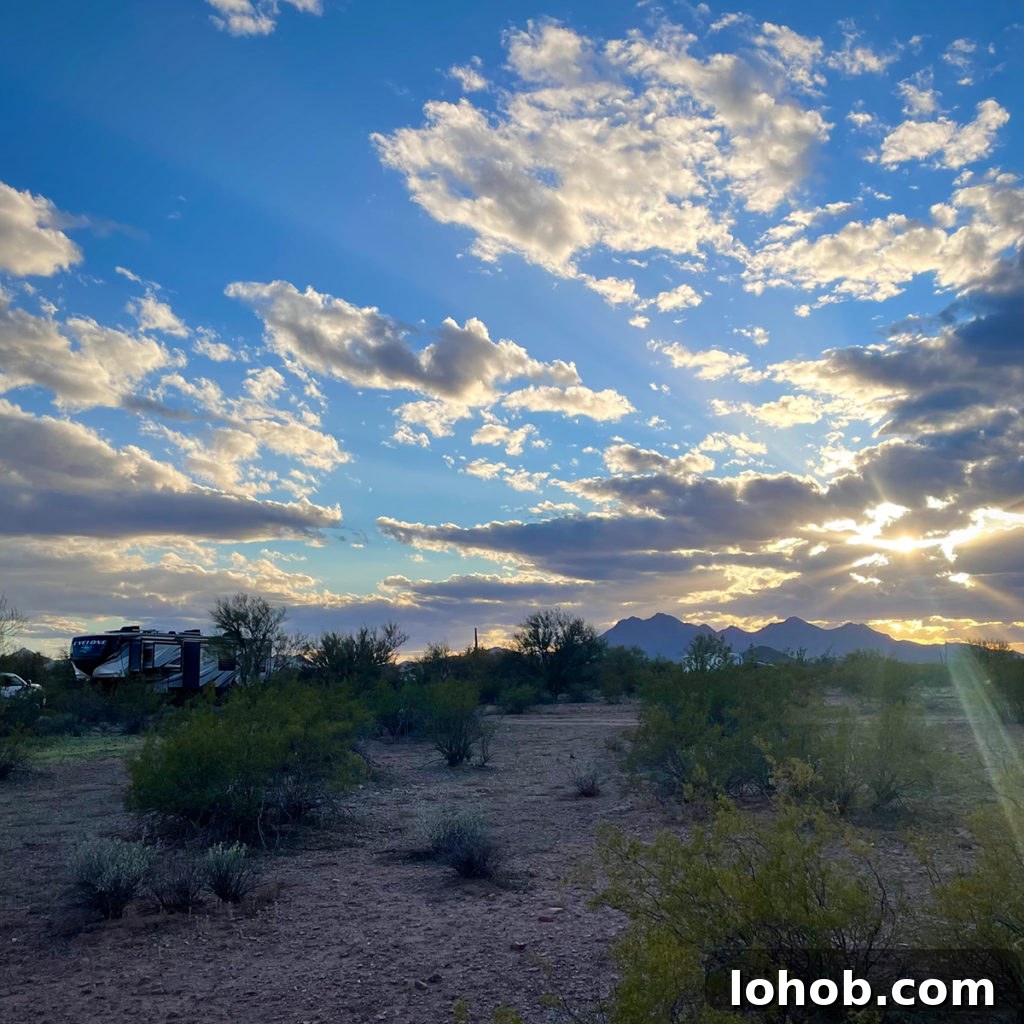
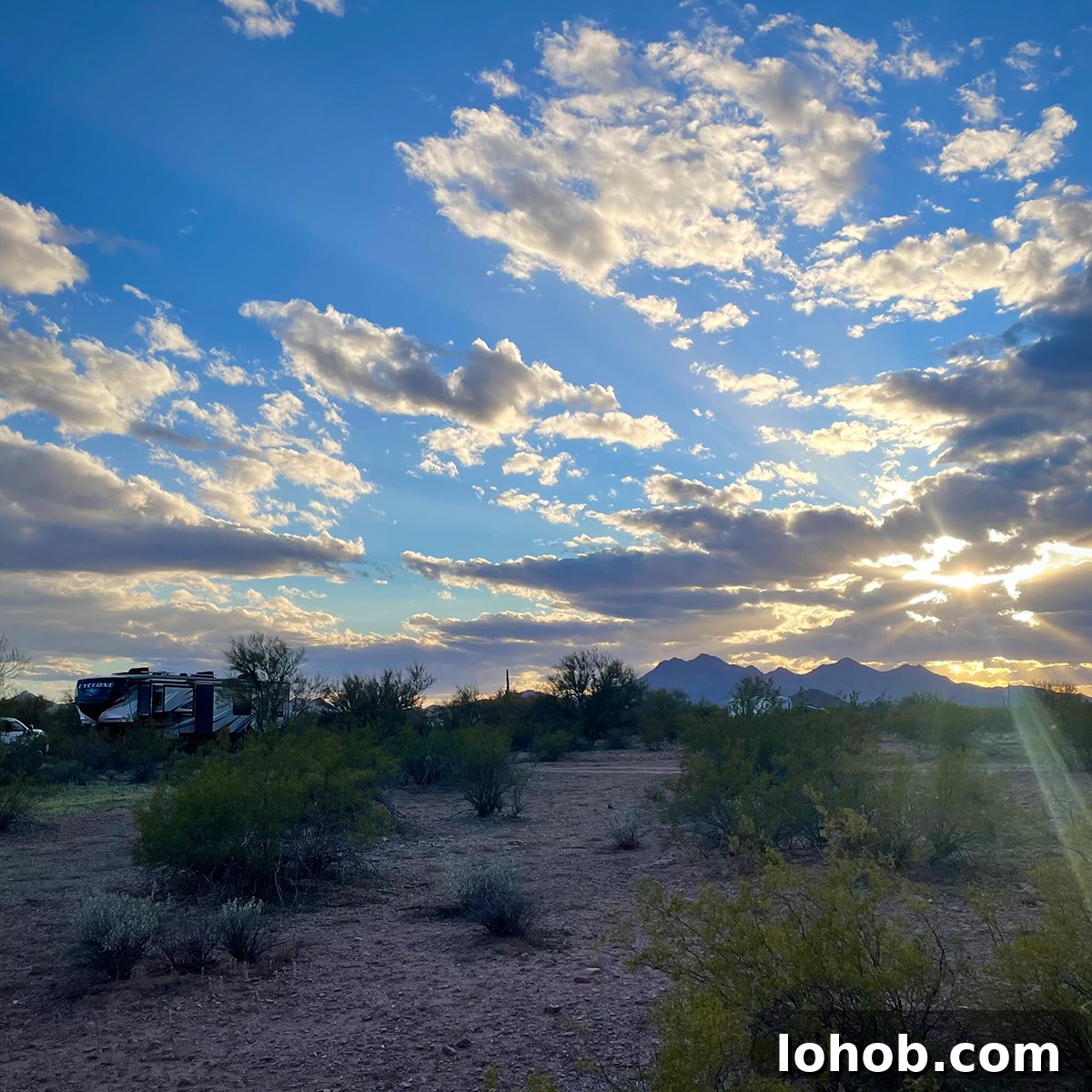
From California Oceans to Arizona Sunsets
In the first week of March we left a busy resort-style RV park in San Diego, where we’d spent seven weeks, and headed inland for three weeks of boondocking in Ironwood National Monument, Arizona. The contrast could not have been greater.
The silence was striking.
One of the greatest pleasures of RV life is the constant change of scene. It’s not just about visiting new places — it’s also about how different our daily rhythms can be depending on where we stop.
The RV resort in San Diego was lively: bicycles, families arriving and leaving, dogs on walks, maintenance crews, and nightly conversations around campfires and grills. That vacation energy is contagious and fun to experience.
By contrast, the open desert offered vast quiet and solitude. People were few and far between, and the stillness allowed us to slow down and reflect.
I value both kinds of experiences equally. Still, it took a few days to adjust to the hush of the Arizona desert.
Silence has a way of stripping away distraction and leaving you with your own thoughts. After losing our son two years ago, I’ve lived through emotions I once feared would be overwhelming. They never broke me, though solitude sometimes makes me think they might. That quiet time reminds me that I can feel deeply and still carry on.
Solitude often brings clarity, boosts self-awareness, and can open the door to creativity and new ideas. It’s a gift to be able to be content with yourself, even when the world outside is still.
RV Renovation Project: Garage Remodel
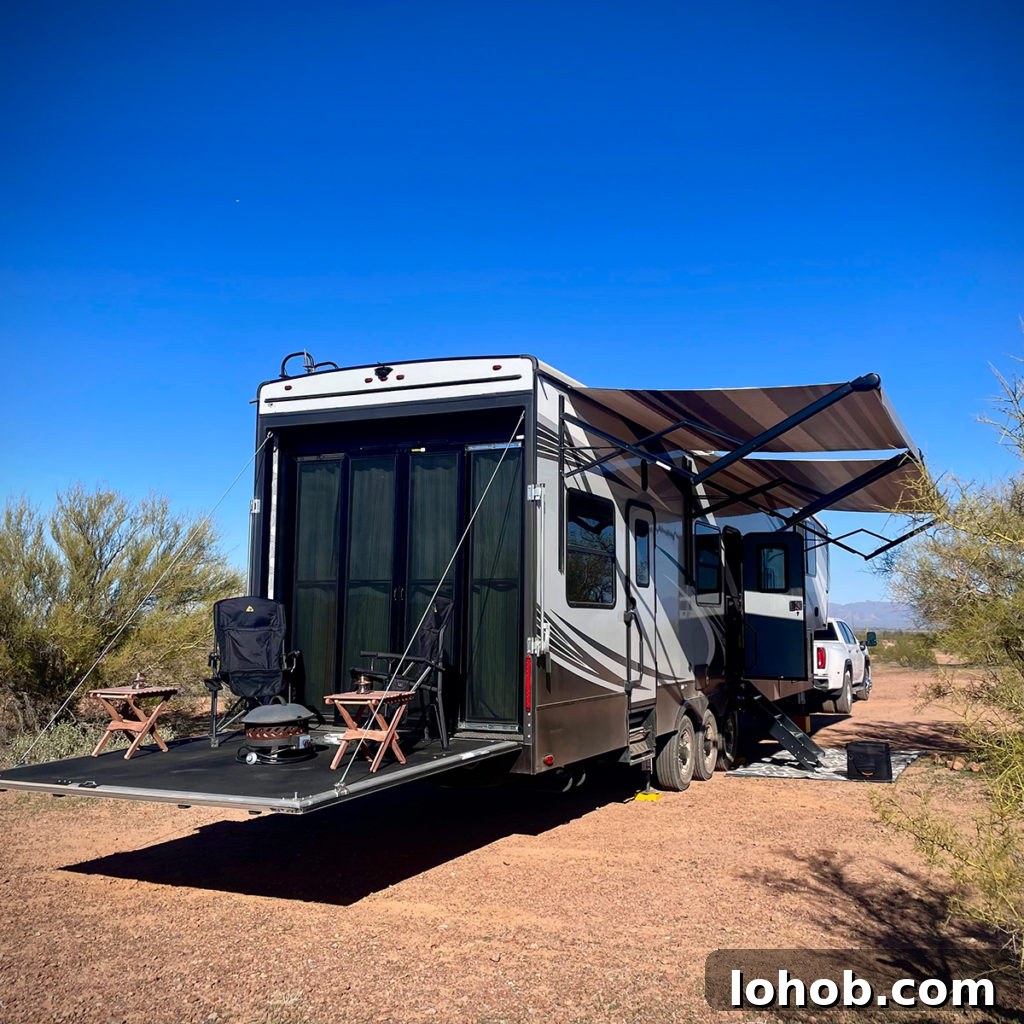
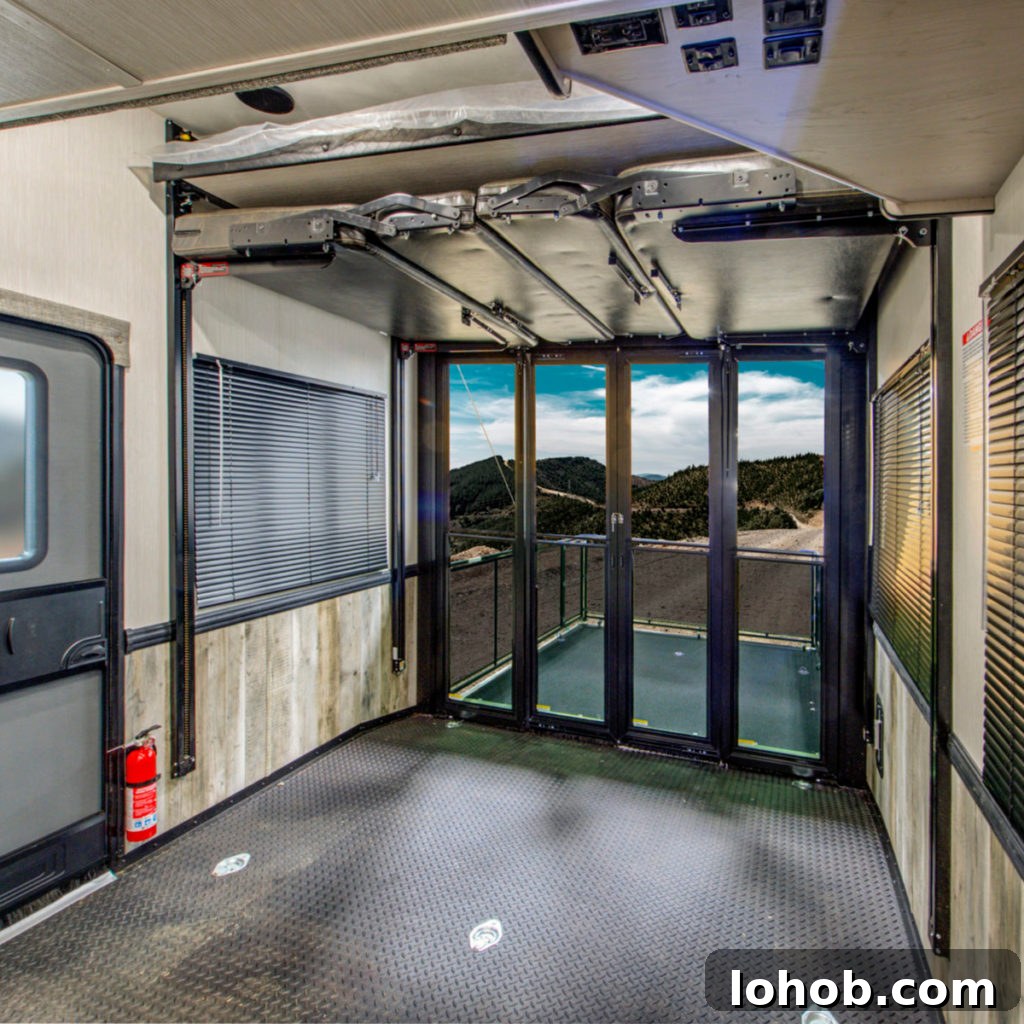
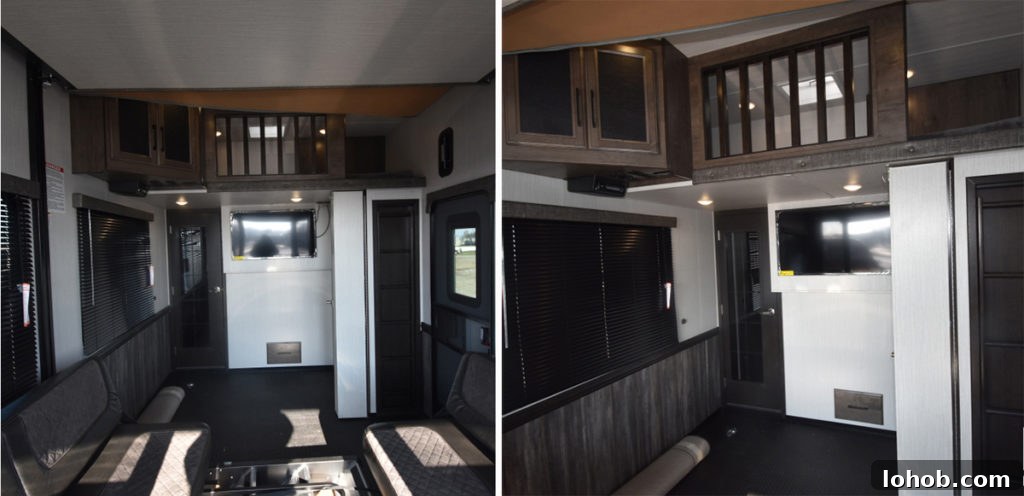
Our RV is a toy hauler, so it has a rear “garage” designed to carry motorcycles, ATVs, and other gear. The ramp folds down for loading and closes up to secure our toys when we travel. For us, that garage has become much more than storage — it’s a flexible living space.
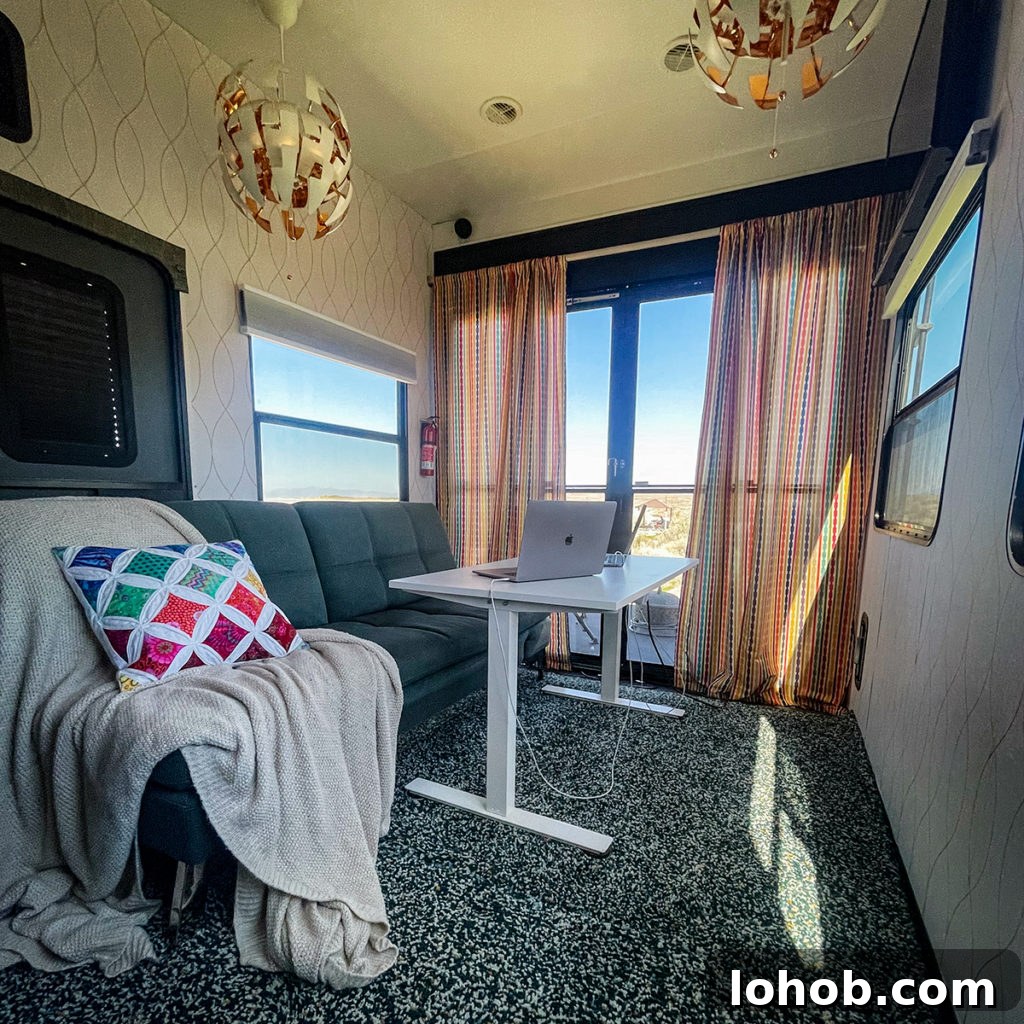
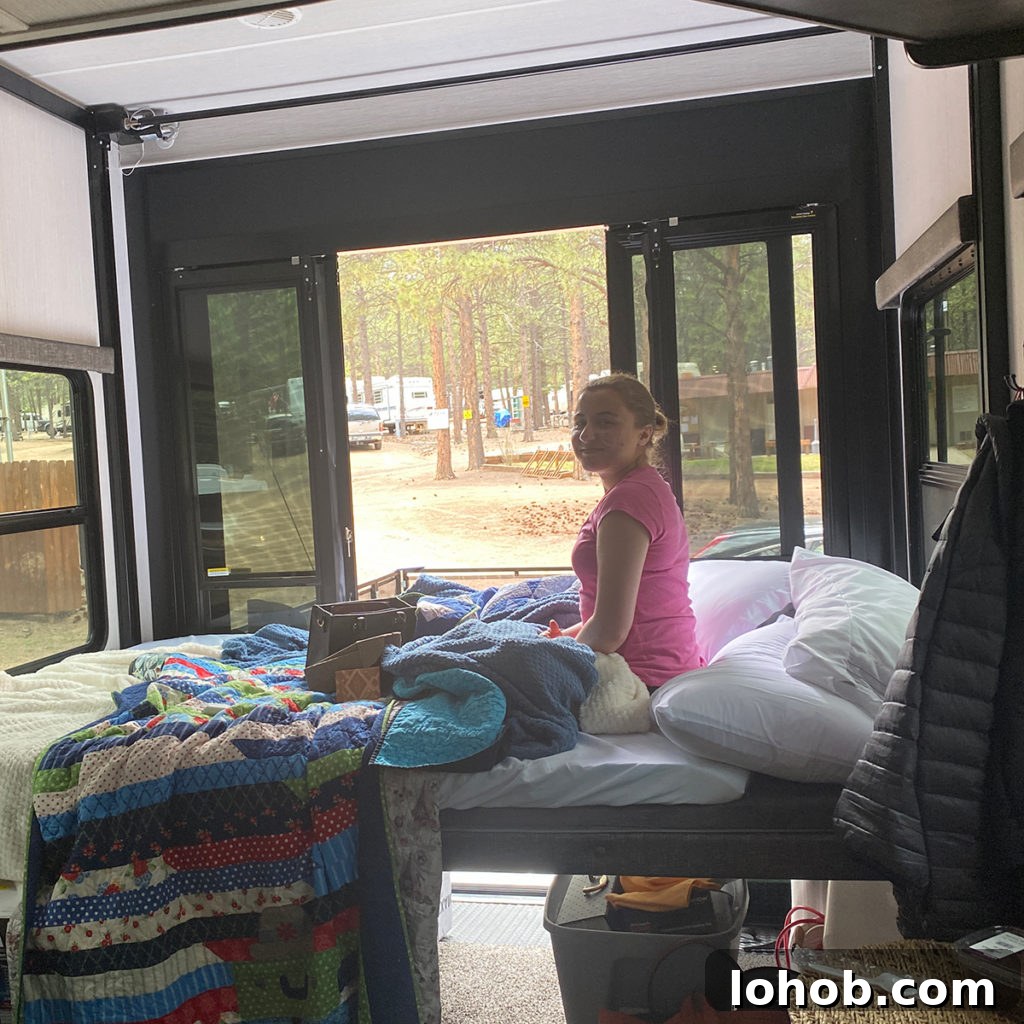
During the week the garage serves as Steve’s office, and when guests visit it transforms into an extra sleeping area. The original configuration included bench seating, a removable table, and a bed on a track that raised and lowered electronically. While functional, it wasn’t ideal for our needs, so over several months we remodeled the space to better reflect how we live.
How we converted the garage into a multi-purpose space
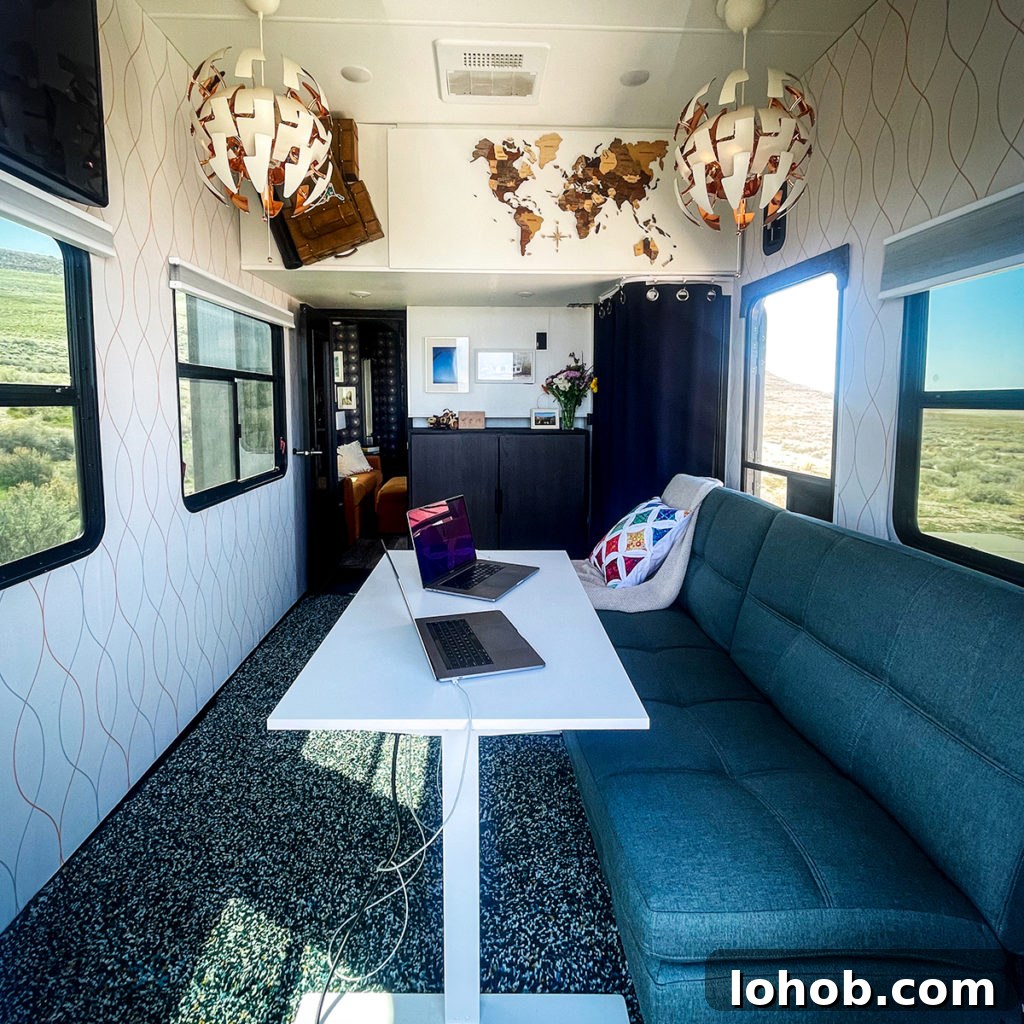
- Replaced the bench seating, table, and track bed with a fold-out Coddle sofa that converts into a bed and added a standing desk for work.
- Removed faux wood paneling and installed wallpaper for a brighter, updated look.
- Replaced low-quality ceiling speakers with hanging light fixtures to improve the ambiance.
- Removed the thin factory carpet and added plush area rugs for comfort and warmth.
- Upgraded the TV to a higher-quality unit, moved it to the wall opposite the sofa, and routed wiring through the ceiling. Video game consoles are tucked away in loft storage.
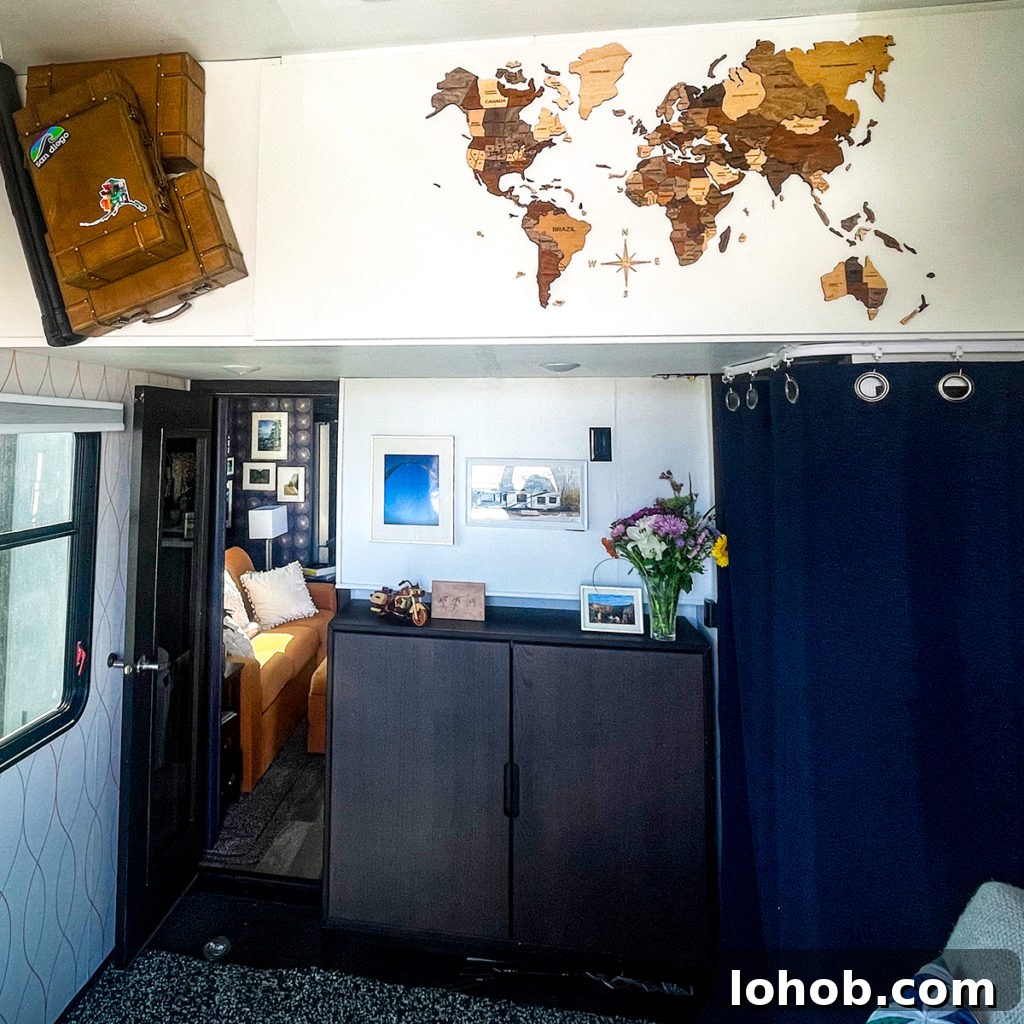
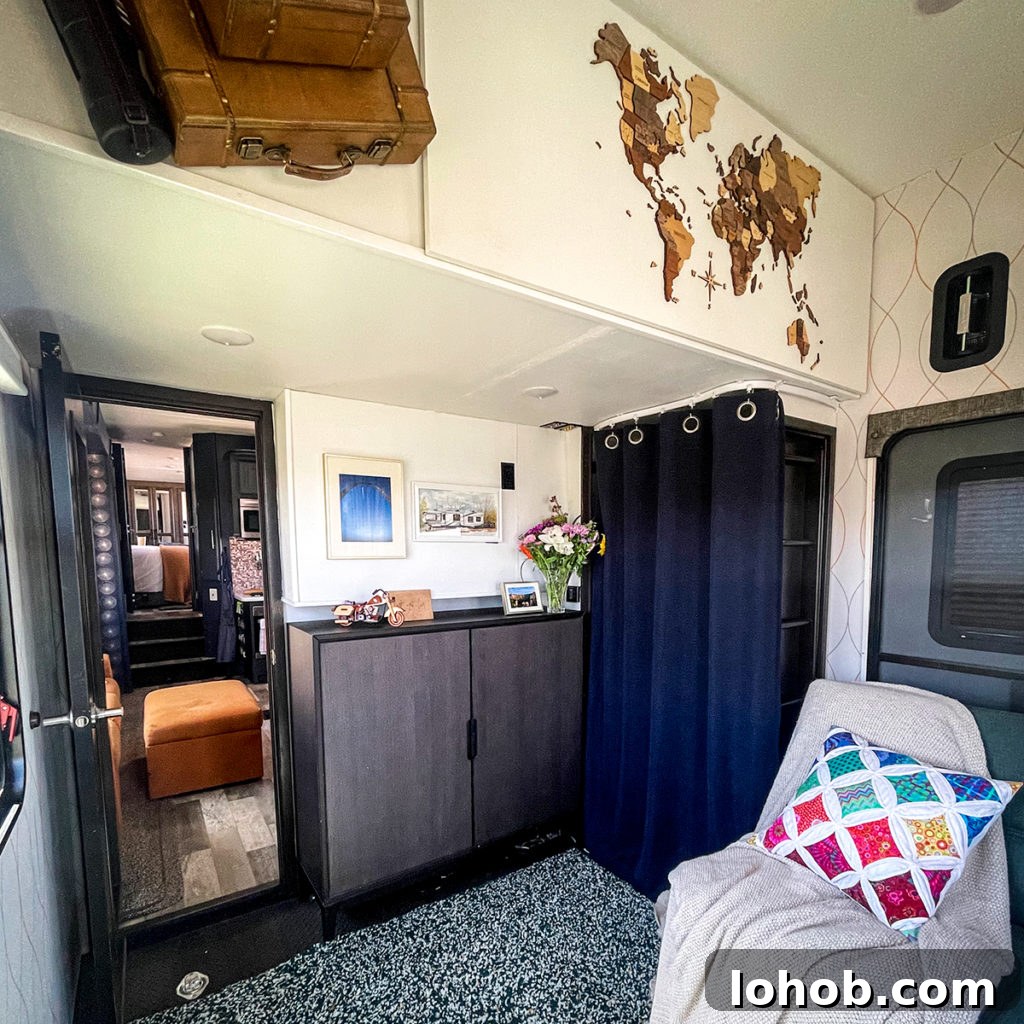
- Cleared out a corner cabinet that held wiring and organized cables inside decorative travel suitcases. We integrated old controls into our home automation system and linked them with Alexa.
- Swapped the small bathroom door for a curtain to create extra space in the tiny half-bath.
- Replaced cheap plastic window shades and valances with accordion-style shades for a cleaner appearance and better light control.
- Replaced the loft railing with a cabinet door to enclose and use the loft for storage, creating a new place to display a carved wood world map.
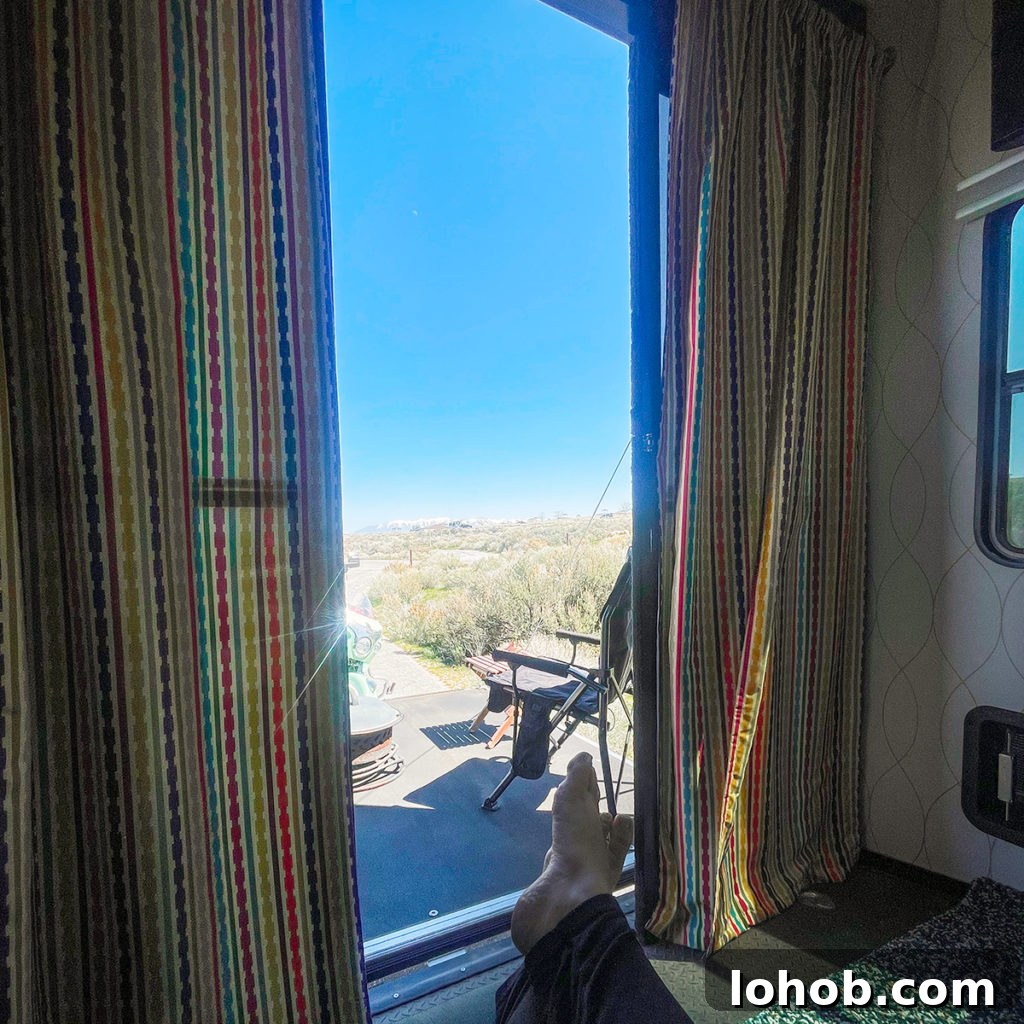
- Hung curtains across the sliding glass doors and added a large wooden cabinet for additional storage.
A Few of Our Favorite Things About Ironwood Forest National Monument
Ironwood Forest National Monument covers roughly 129,000 acres of Arizona desert northwest of Tucson. The area is named for the Desert Ironwood trees that grow throughout the region and offers expansive desert views.
We camped on BLM land near an area commonly called Pump Station Road Dispersed Camping. It’s quiet, easy to access, and offers amazing sunsets. Here are a few reasons we enjoyed boondocking in Ironwood:
- Plenty of sun throughout the day, which makes relying on solar power straightforward and reliable.
- The feeling of being remote while still being close to conveniences — the town of Marana is about 10 minutes away and Tucson is roughly 45 minutes.
- Many flat, accessible camping spots with good privacy between sites.
- Abundant opportunities for hiking, bicycling, and motorcycle rides through scenic desert terrain.
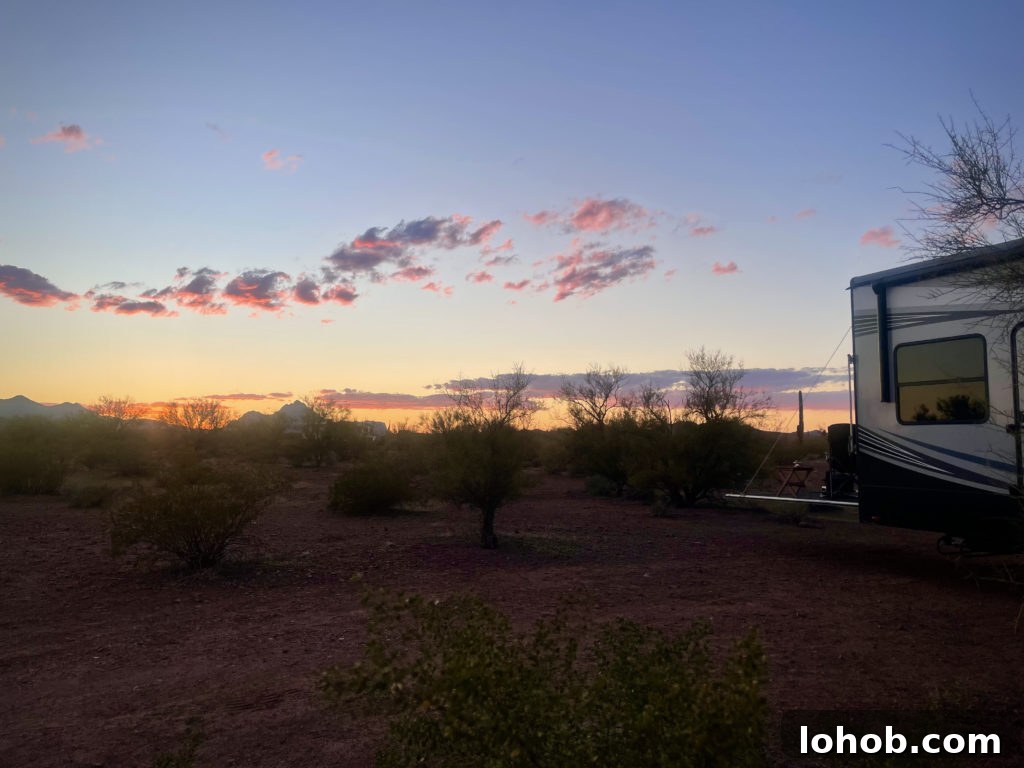
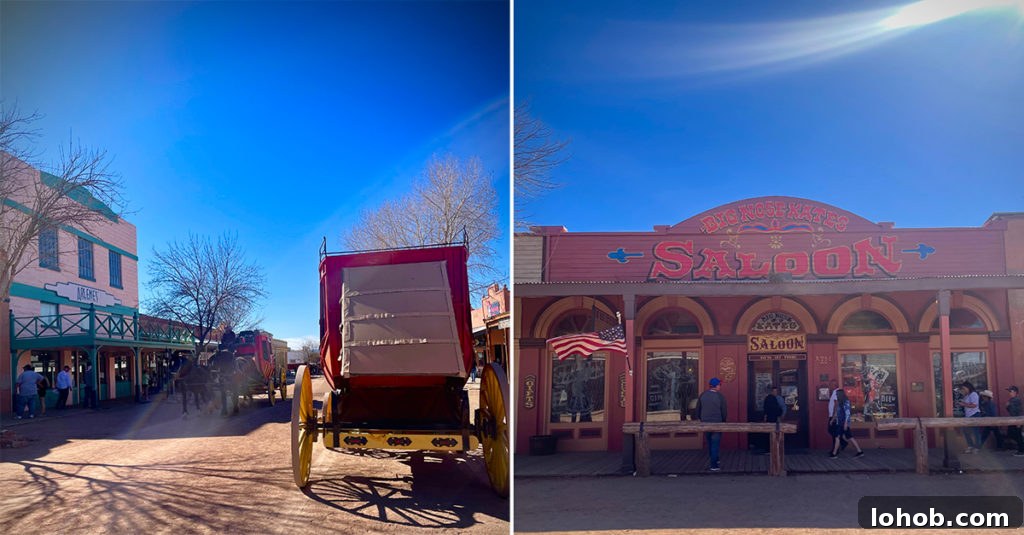
During our first week in Ironwood we enjoyed biking around the area, sharing a lunch with a friend, and taking the motorcycle out to Tombstone, the small Arizona town known for its Wild West history.
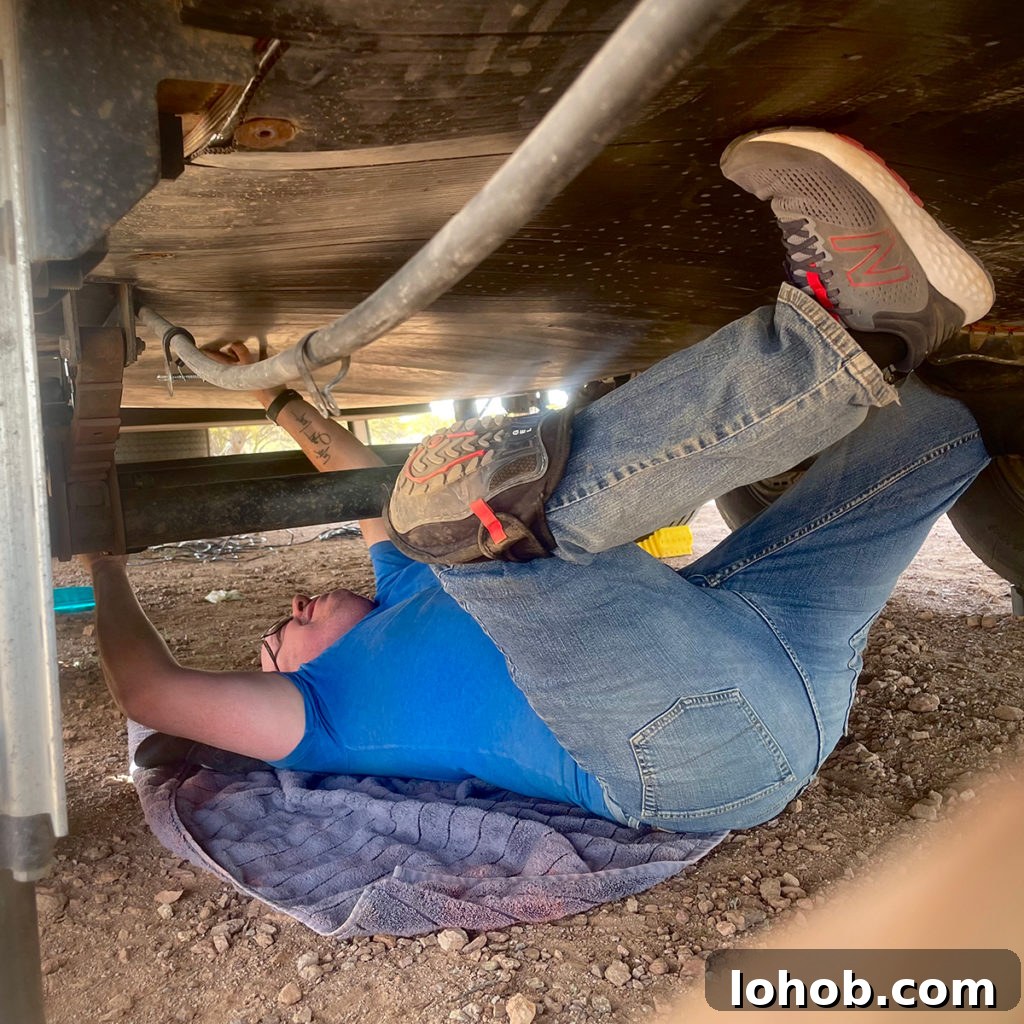
The second week was less exciting: we spent time repairing damage to our sewer system — one of those inevitable maintenance tasks that come with life on the road.
Just Because the Manufacturer Says an RV Is “Four Season” Doesn’t Make It So
We went into full-time RV life knowing repairs and upgrades would be part of the journey. The RV industry has uneven quality control, and even new, high-end rigs can have issues. Many owners who take their RVs in for warranty work report long wait times and incomplete fixes.
From the start, we decided to handle repairs ourselves whenever possible. That’s practical for us because Steve enjoys and is capable of tackling most mechanical and system fixes.
Our rig included a so-called “yeti package” intended to protect plumbing and tanks from freezing. After a winter in Colorado last year, it became clear that the package did not perform as advertised. While in Arizona we inspected the underbelly and discovered a heating pad disconnected from the tank and other inadequate protections.
Steve repaired the freeze damage, properly insulated pipes, and upgraded the system so we’ll be in much better shape this winter. That project was one of the toughest we’ve tackled, but it also boosted our confidence in managing challenges that come with living in a mobile home.
There’s a silver lining to things breaking: each repair teaches us more about how our RV was built. Often we not only fix the immediate issue but also make broader improvements to the system.
The Southwest Corner of Utah
We spent the final week of March in Bluff, a tiny town of about 300 people in the southwest corner of Utah. Bluff doesn’t have a grocery store, but it surprises visitors with some excellent dining options.
Our favorite meal was at Cottonwood Steakhouse — a memorable steak followed by homemade cherry pie.
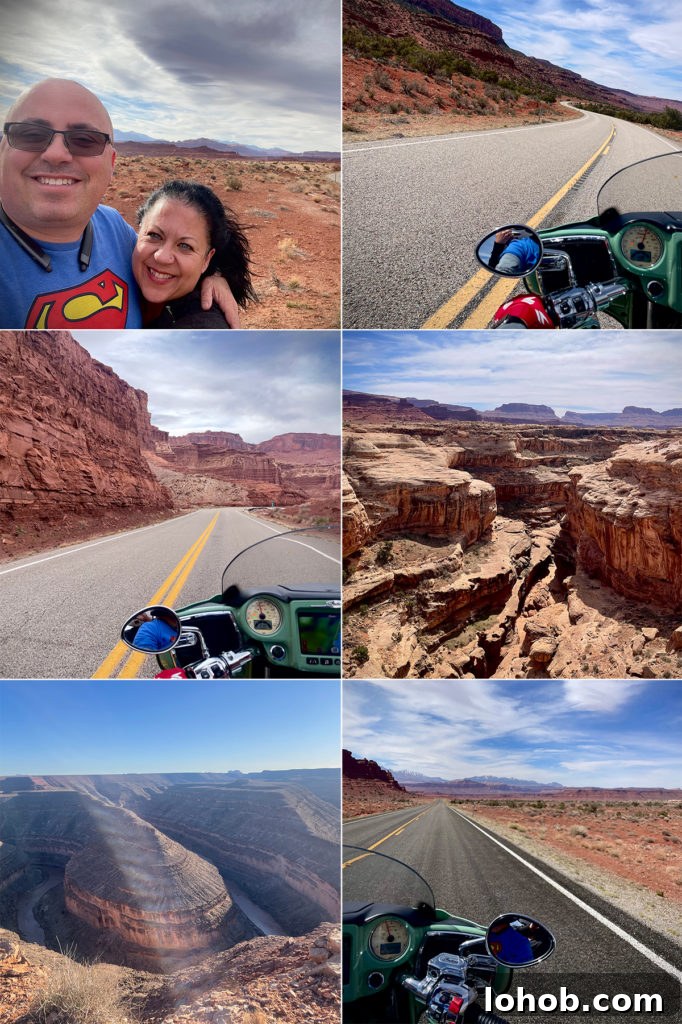
Utah offers scenic drives in every direction. If you visit the area, consider these routes:
- Utah 95 from Blanding to Hanksville. This 133-mile stretch passes sections of Lake Powell, dramatic red-rock cliffs in the Glen Canyon National Recreation Area, and winding canyon roads.
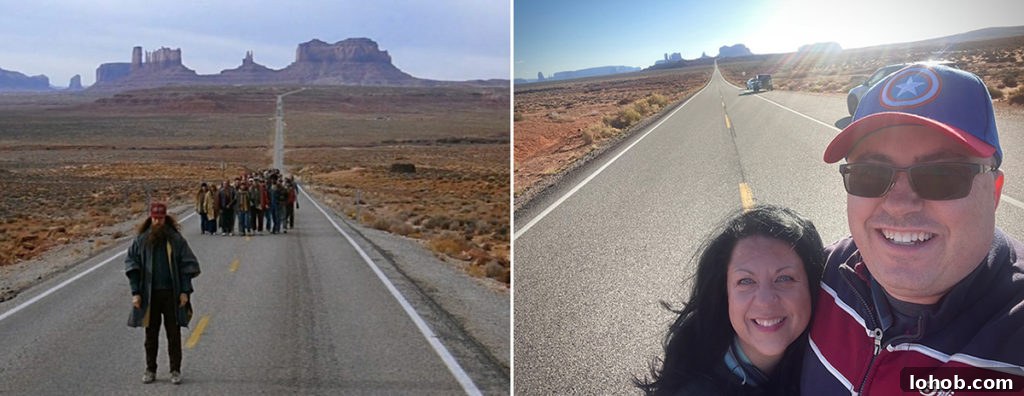
- US 163 through Monument Valley. A stunning drive with an iconic stop at the spot known as “Forrest Gump Point,” where the famous running scene was filmed.
- Goosenecks State Park and the road toward Natural Bridges National Monument. Goosenecks has primitive, first-come-first-serve camping along the canyon edge carved by the Colorado River. We didn’t camp there this time but plan to return; the drive toward Natural Bridges is spectacular even if you don’t reach the monument on a single trip.
Tools of Our Lives: Keeping My Wiretap Connected
by Steve Blackwell
Over the last two years our internet setup has evolved from a simple hotspot to a robust system designed to keep us connected while on the move. We began with a MOFI4500 router paired with an unlimited T-Mobile plan from RV-4G.com, which served us well when we stayed mostly in areas where T-Mobile had good coverage.
As we traveled more widely we added a Verizon hotspot for backup and later invested in a more capable router and antenna system when mobile data reliability became essential to our work.
Our current setup includes a Pepwave MAX Transit CAT18, a Parsec Husky Pro 9 antenna, and an unlimited AT&T data plan. The Pepwave offers advanced features that let us combine sources, connect to park Wi‑Fi as a WAN source, and manage multiple SIMs and devices more smoothly than our original configuration.
We also use MOFI4500 units as additional LTE routers for redundancy. Many of the devices in our setup run on 12 volts, so they remain powered during AC outages if our inverter isn’t working — an important reliability advantage when you depend on the internet for work.
Learning the Pepwave features
At first I treated the Pepwave like a straightforward LTE router, but I gradually discovered features that changed how we manage connectivity. While parked in a Colorado campground, I learned the Pepwave can use campground Wi‑Fi as a WAN source, which was a major benefit. I also discovered a dedicated WAN port that accepts another router, which made switching between networks faster and more reliable.
One useful setting is the ability to set a data cap for a SIM card, which helps avoid unexpected throttling. In hindsight, if we were building the system again I might rely solely on the Pepwave for multi-WAN management and skip the extra Synology router, but the Synology has served well for dual‑WAN needs in the past.
Cost and recommendations
The Pepwave is not inexpensive, but for people who earn a living on the road and need consistent, fast internet it’s a worthwhile investment. For occasional campers who only need connectivity a few times a year, simpler and less expensive options like the MOFI4500 paired with a pay-as-you-go plan from RV-4G.com may be a smarter choice.
For tech-minded readers, here’s a brief summary of our setup:
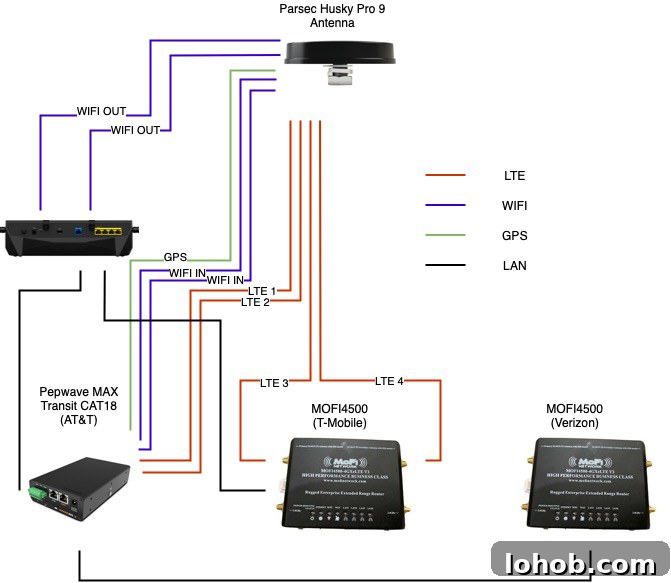
Data plans:
- T-Mobile unlimited SIM from RV-4G.com
- Verizon hotspot SIM
- AT&T unlimited SIM (effectively large-volume plan)
Hardware:
- Synology RT2700ac dual-WAN wireless router
- Pepwave MAX Transit CAT18
- Two MOFI4500 units
- Weboost signal booster
- Parsec Husky Pro 9, 9-in-1 5G antenna
Do we need all of this? Probably not. Are we glad we have it? Absolutely — reliable internet is central to our nomadic lifestyle and work.
More Resources for RVers
- What is boondocking? — Frequently asked questions about boondocking and how to prepare.
- Past issues of Let’s Get Lost
- Camping Recipes
- Favorite Blackstone Griddle Recipes
- Our Yearly Travel Schedule
Thanks for reading!
We’ll see you next month. If you have questions or comments, please leave a note — we love hearing from readers and fellow RVers.