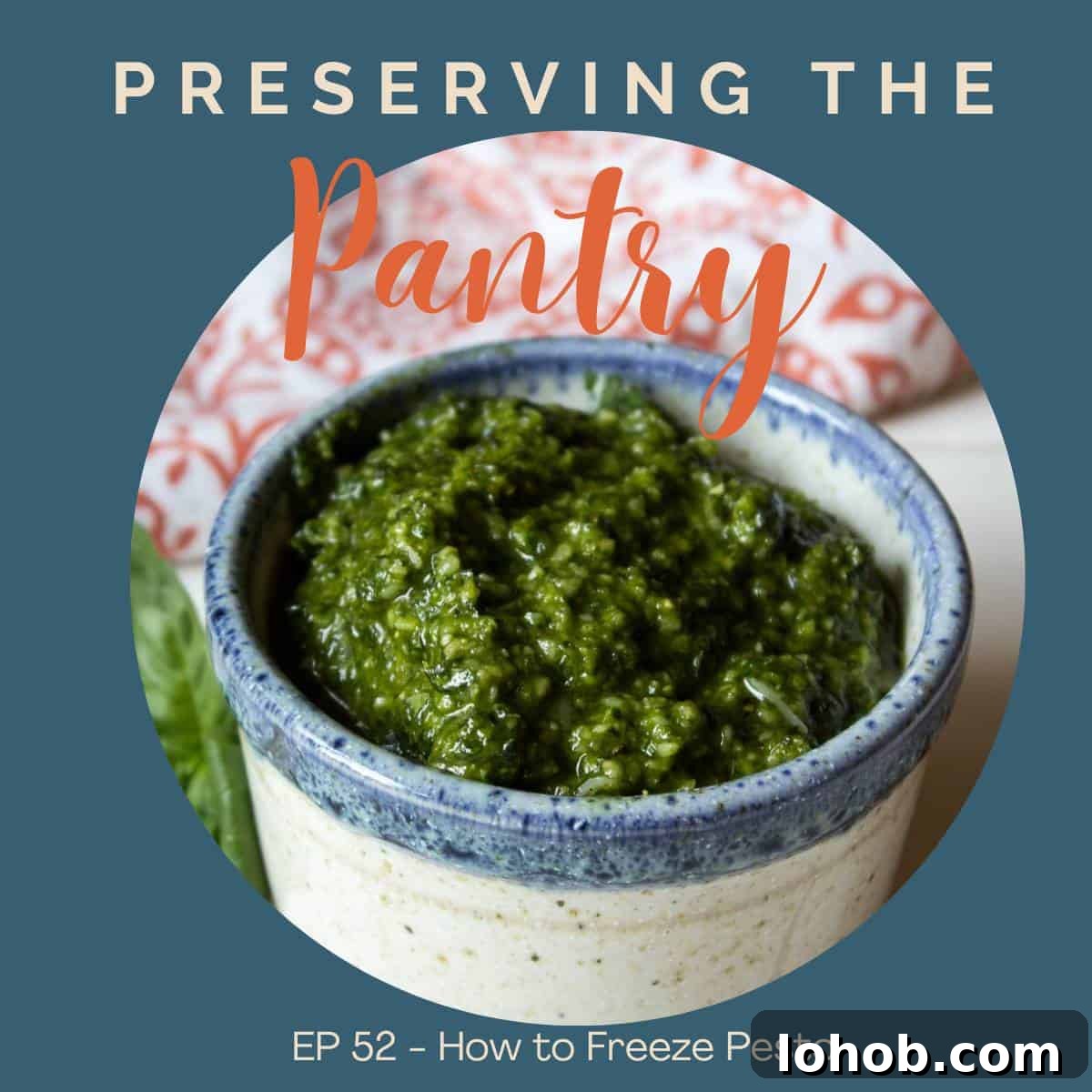
In this episode, Kathy shares a simple basil pesto recipe and offers practical tips for freezing pesto so you can enjoy it year-round.
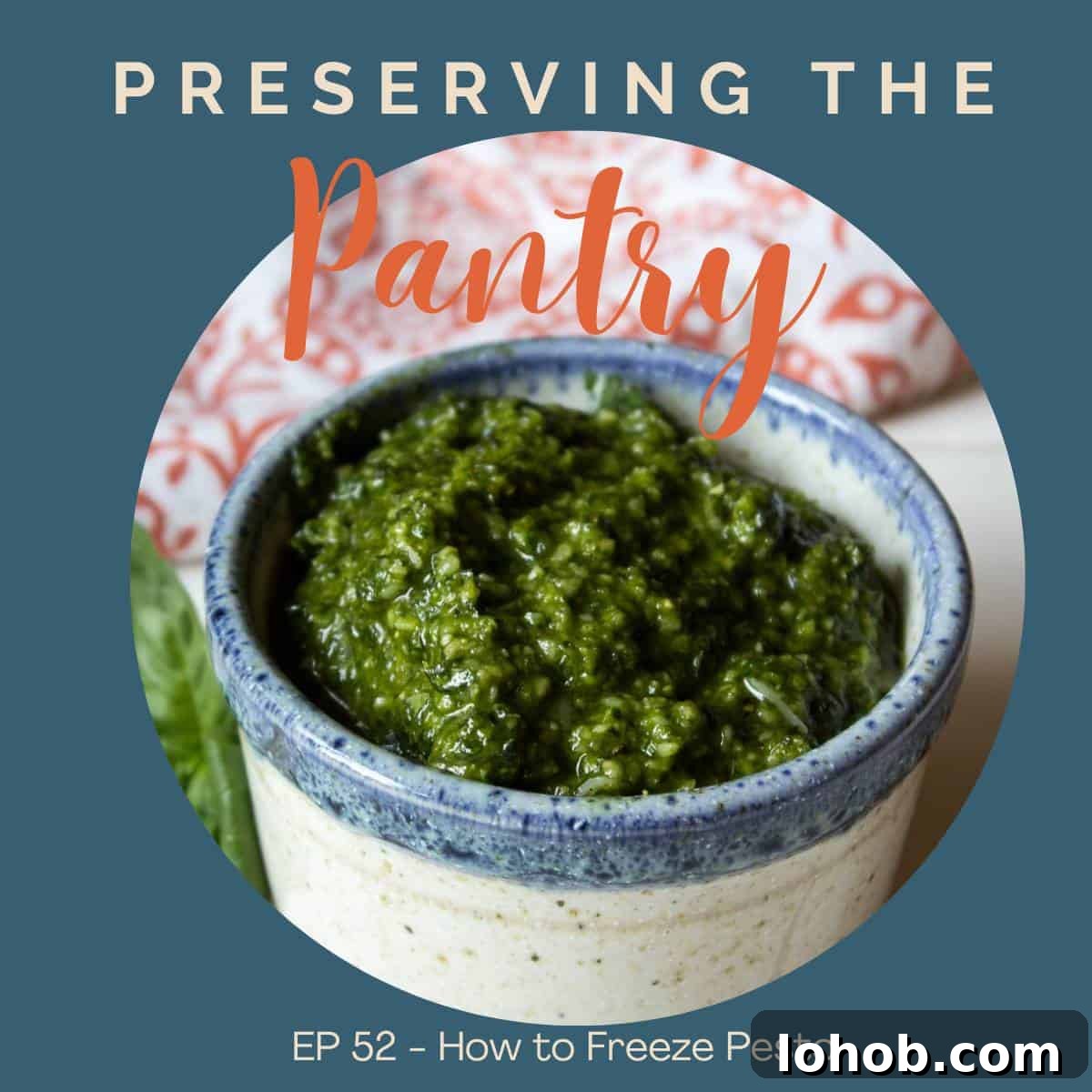
Play the episode
Recipes
Find the complete recipe for Basil Pesto.
Recipes using pesto
- Creamy Pesto Gnocchi
- Cheesy Pesto Garlic Bread
- Grilled Cheese with Pesto
- Pesto Chicken Sandwich
In this episode you’ll learn:
- How to make basil pesto
- Two reliable methods for freezing pesto
- How to use frozen pesto in everyday cooking
Where to listen to the podcast
Listen to this episode on iTunes, Spotify, Amazon Podcast, or your favorite podcast player. Or scroll down to read the full transcript.
If you love this podcast, I’d love to hear about it! Leave a comment below and hop over and leave a comment on Instagram @preservingthepantry!
Transcript
Hello and welcome back. Today we’re focusing on stocking the freezer with summer produce—specifically basil. We’ll make basil pesto and I’ll share my method for freezing it so you can use it all year long.
I started with a living basil plant I bought earlier in the season. It came as several small plants in one pot, so I separated them and planted each in its own large pot of soil. After a brief wilt, they perked up and have been thriving on my deck. I’ve been trimming leaves often and want to preserve some of that fresh basil as pesto.
For this basil pesto you’ll need:
- 4 cups fresh basil leaves
- 2 cloves garlic (add more if you love garlic)
- 1/2 cup olive oil (plus more if needed)
- 1/4 cup pine nuts (raw or toasted)
- 1/2 cup Parmesan cheese
- About 1/4 teaspoon each salt and pepper
Start by chopping the garlic in a food processor, then add the basil leaves and pulse until finely chopped. With the processor running, stream the olive oil through the feed tube so it emulsifies with the basil. Add the pine nuts, Parmesan, salt, and pepper, and pulse until the mixture reaches your preferred texture. I like a slightly coarse pesto, but you can process it smoother if desired. If it’s too thick, add a little more olive oil.
You can use the pesto immediately, store it in the refrigerator for up to five to seven days, or freeze it for longer storage. I prefer to make extra and freeze it using two methods depending on how I plan to use it.
Method 1 — Portion in tablespoons: Spoon tablespoon-sized portions into ice cube trays, freeze solid, then transfer the frozen cubes into a freezer-safe bag. These small portions are perfect for stirring into sauces—like spaghetti sauce—where a single cube adds bright basil, garlic, and Parmesan flavor without much fuss.
Method 2 — Larger blocks: Measure out half-cup or one-cup portions into small plastic containers, freeze, then remove the frozen blocks and store them in a freezer-safe bag. These larger portions are convenient when you need more pesto for a recipe or to toss with pasta or vegetables.
To use frozen pesto, remove the amount you need and thaw it in the refrigerator or at room temperature. The color may darken slightly after freezing, but the flavor remains excellent. In a deep freezer, pesto will keep well for three to six months. Freezing is a great way to preserve basil when it’s abundant so you can enjoy the flavor later.
I hope you give this pesto and freezing method a try. Let me know how it works for you. I’ll see you next week in the pantry. Bye.
Thanks for listening, and be sure to tune in next week for more episodes of Preserving the Pantry.