
Learning to recognize your hunger cues is central to becoming a more mindful, intuitive eater. Eating when you’re appropriately hungry (rather than waiting until you’re overly hungry) helps keep blood sugar steady and supports better food choices. The hunger–fullness scale is a practical tool to help you tune inward and respond to what your body needs. Here’s how to use it.

When I work with clients one-on-one, one of the first questions I ask is: “Do you ever eat past the point of feeling full?”
The answer is almost always yes. And I’m no exception — I do sometimes, too. The reason I ask is to open a conversation about hunger cues and how we respond to them.
We live in a culture saturated with advice about portion sizes, carbohydrates, proteins, fats, and eating more vegetables. Those topics matter, and I’ve written about them as well. But if you skip meals or consistently overeat, it doesn’t matter how many vegetables you pile on your plate — it undermines a healthy relationship with food, which should be the foundation for lasting nutrition habits.
This is why learning how to listen to your hunger cues is essential.
But what is HUNGER?
Food insecurity and hunger are serious societal issues, but if you’re reading this you likely have access to food and hunger takes on a different meaning: a personal, physiological signal. Hunger can be described as “a feeling of discomfort or weakness caused by lack of food, coupled with the desire to eat.”
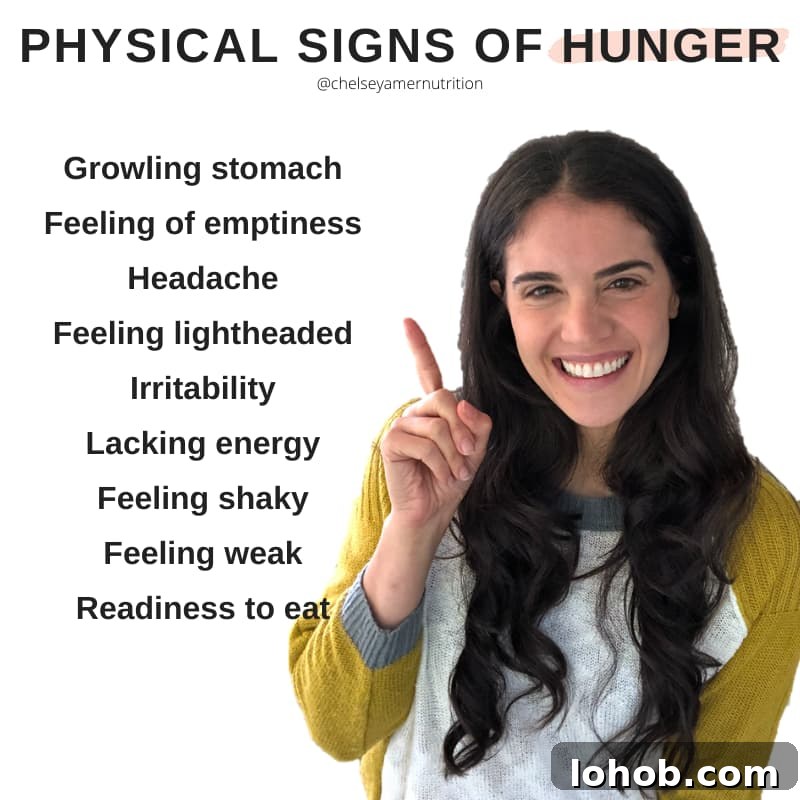
When you’re hungry your body will exhibit physical signs, including:
- Growling stomach
- Sensation of emptiness
- Headache
- Lightheadedness
- Irritability
- Low energy
- Feeling shaky
- Muscle weakness
- Readiness to eat
Individuals may notice different signs at different stages of hunger — for example, the signs you feel when you’re ready to eat versus when you’re over-hungry can differ.
Why do you get hungry?
Explaining hunger fully involves biology and behavior, but simply put: your body needs external fuel to function. Hormones such as ghrelin signal the brain that it’s time to eat, producing the sensations we associate with hunger.
What does it mean to be full and satisfied?
Fullness refers to the physical sensation of your stomach being filled. Satiety goes beyond that and includes feeling mentally satisfied or gratified by a meal. Both physical fullness and psychological satisfaction help turn off hunger signals.
We eat not only to meet physiological needs but also for satisfaction. A meal that nourishes both body and mind is more likely to keep hunger hormones balanced and reduce the urge to overeat later.
Balancing hunger, fullness, and satiety — when you have adequate access to food — is essential to move away from diet thinking and to build a healthier relationship with eating.
Hunger, fullness, and satiety are core concepts in intuitive eating because each person’s needs differ. One portion may feel satisfying to one person and insufficient to another. Paying attention to what your own body is signaling allows you to eat what you truly need, not what someone else prescribes.
How do you listen to your hunger cues?
Meet the Hunger and Fullness Scale
I give every client a copy of the hunger and fullness scale during their first session. The scale is a simple, practical tool to reconnect with internal cues and decide when and how much to eat. It’s okay to eat when you’re slightly hungry and to stop when you’re comfortably full — hunger is not a virtue.
Using inner cues helps guide food choices without relying on calorie counting or rigid tracking. Many clients report improved satisfaction and a healthier relationship with food just by practicing the scale, even without changing other eating habits.
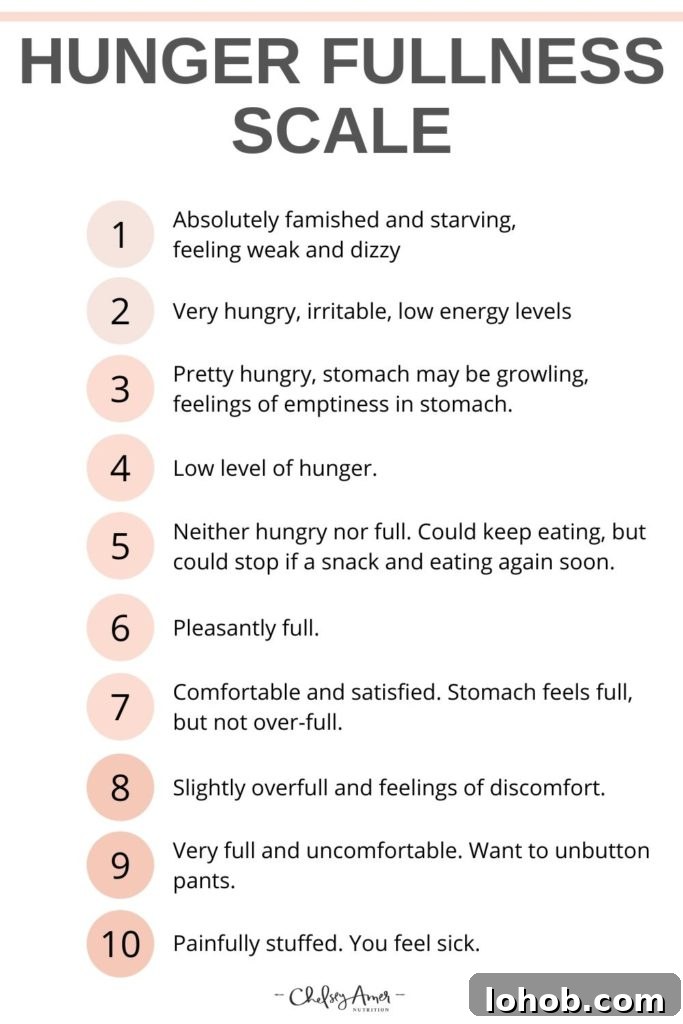
How to Use the Hunger and Fullness Scale
Start by checking your pre-meal hunger level. Ask yourself, “On a scale of 1–10, how hungry am I?” Many people find eating around a 3 on the scale works well — you’re neither starving nor unwilling to eat. At first it can feel awkward distinguishing a 3 from a 4, but with practice you’ll learn your own signals.
What happens when you’re over-hungry?
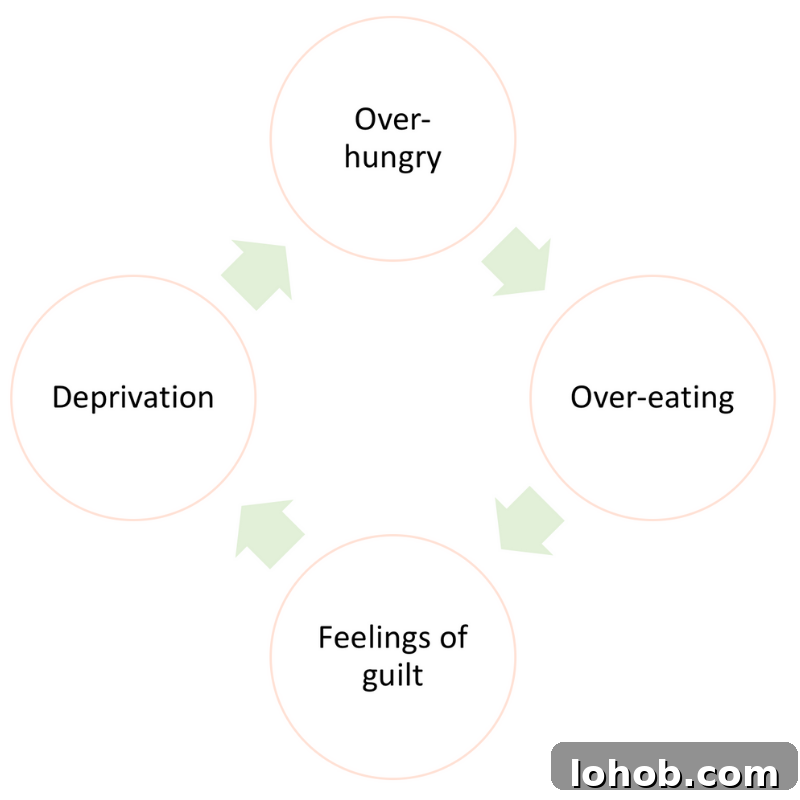
Waiting until you’re overly hungry can lead to low blood sugar, intense cravings, and a higher likelihood of overeating. It’s also harder to choose a balanced, nutritious meal when you’re ravenous. Repeated deprivation often triggers cycles of restriction and overeating.
Allowing yourself to enjoy foods you love within your cues helps prevent deprivation and the strong hunger that follows. When you regularly ignore hunger, you may end up eating far past comfortable fullness and then feel guilt or shame — a pattern many chronic dieters recognize.
Undereating and extreme restriction are not effective long-term strategies for weight loss or well-being. Listening to hunger and fullness is a sustainable, health-focused approach.
How to Use Your Hunger and Fullness Cues to Decide How Much to Eat
Many people feel compelled to eat until they’re stuffed because they expect a long gap until their next meal. A helpful mindset shift is to accept that you can always eat again if you’re hungry later.
It’s okay to stop before you’re stuffed because you can have more later if needed.
That realization is a common “aha” moment for clients: knowing you can add a small snack later reduces the pressure to overeat now. Preparing by keeping a favorite grab-and-go snack available makes this strategy practical.
I don’t use cookie-cutter meal plans. Instead I support clients in learning to trust their bodies so they can make choices that leave them nourished, satisfied, and less likely to feel hangry.
XO